

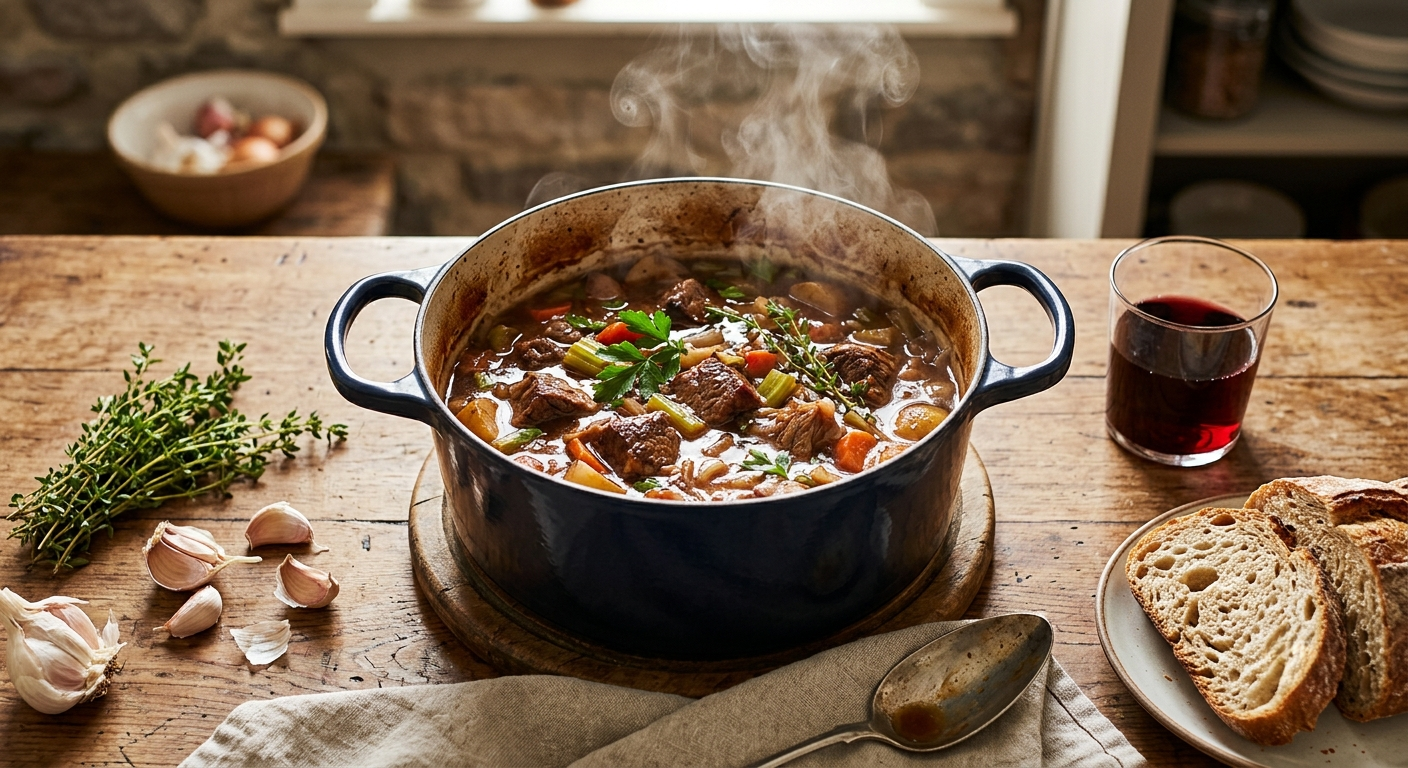
Nothing brings warmth and comfort to the kitchen like a pot simmering slowly on the stove. Whether you are craving a velvety bowl of soup or a rich, hearty beef stew, mastering deeply flavorful soups stews and braises relies on fundamental culinary principles rather than guesswork.
Understanding how ingredients transform under low and slow heat turns simple winter vegetables and tough cuts of meat into rich, restaurant-quality meals. In this ultimate guide, we will break down the essential techniques, ingredients, and step-by-step methods needed to build complex, mouthwatering flavor profiles in your kitchen every single time.
Key Takeaways: Mastering Deep Flavors
- The Searing Step: Always sear proteins deeply to unlock the Maillard reaction, forming the foundation of rich gravies and broths.
- Aromatics Matter: Build an aromatic base using classic combinations like mirepoix (onions, carrots, celery) cooked until translucent or caramelized.
- Deglaze the Fond: Never wash away browned bits stuck to the bottom of your pot; use acid, wine, or broth to lift those concentrated flavors into your liquid.
- Low & Slow Transformation: Slow cooking allows tough collagen in meats to break down into silky gelatin, giving your sauces natural body and mouthfeel.
- Balance at the End: Always finish your pot with a touch of fresh acid (lemon juice or vinegar) and herbs to lift heavy, rich flavors.
1. The Science of Flavor Building: Searing and the Maillard Reaction
The difference between an average soup and deeply flavorful soups stews and braises starts long before liquid touches the pot. It begins with searing.
When you brown meat at high heat, you initiate the Maillard reaction—a chemical reaction between amino acids and reducing sugars that creates hundreds of new flavor compounds.
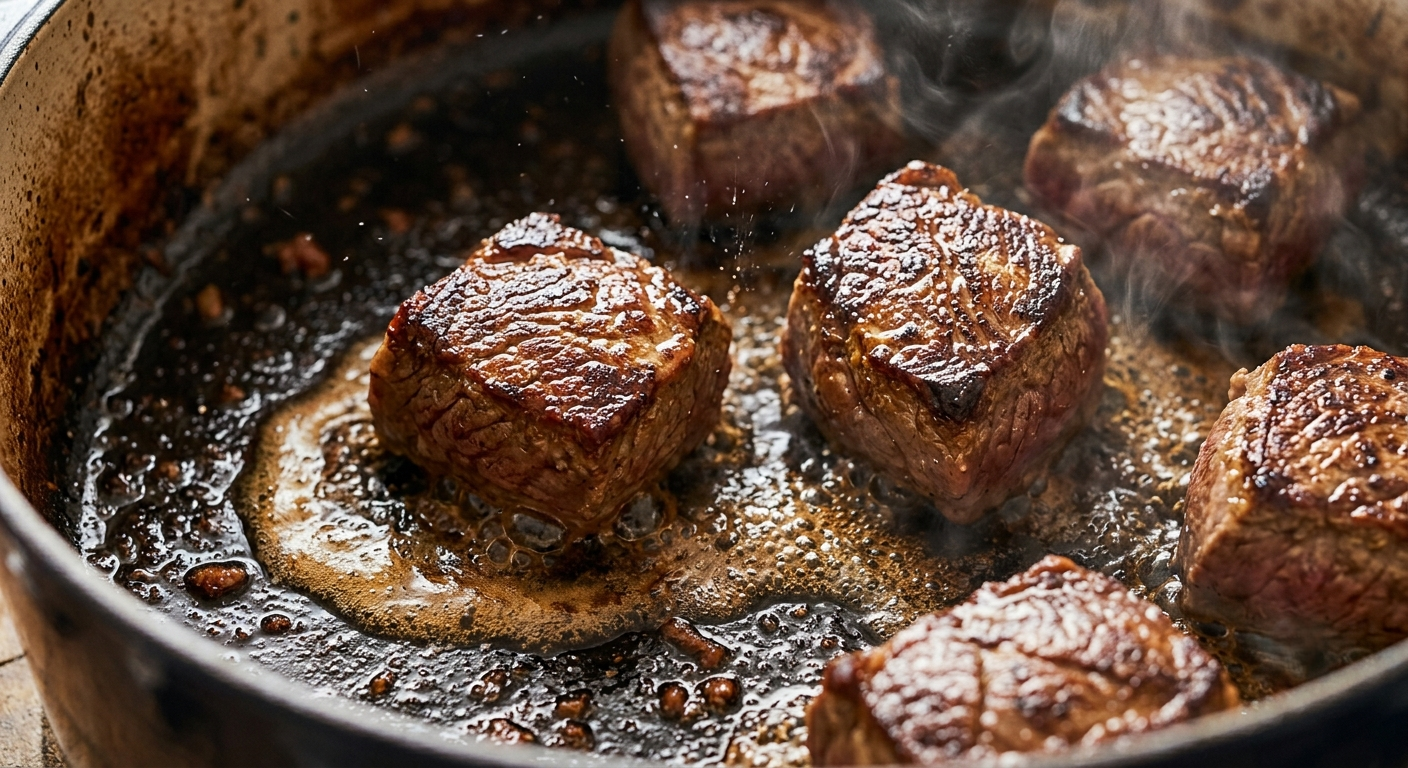
To get a proper sear:
- Pat the meat dry: Moisture creates steam, which prevents browning.
- Avoid overcrowding: Give pieces space in the pan so heat circulates evenly.
- Patience: Let the meat release naturally from the pot bottom before flipping.
Once your protein is browned, remove it from the pot, but leave the rendered fats and browned bits behind.
2. Building the Aromatic Foundation
Aromatics are the silent heroes of comfort cooking. They create the foundational layers that carry flavor throughout the entire cooking process.
Classic Flavor Bases
- Mirepoix (French): 2 parts onion, 1 part carrot, 1 part celery cooked gently in butter or oil.
- Holy Trinity (Cajun): Equal parts onion, bell pepper, and celery.
- Sofrito (Spanish/Latin): Garlic, onions, paprika, tomatoes, and peppers sautéed until rich and sweet.
Cooking aromatics low and slow unlocks their natural sugars. Adding tomato paste at this stage and letting it cook until it turns a deep mahogany color adds a massive punch of savory umami to your deeply flavorful soups stews and braises.
For a deeper look into selecting the right meat cuts for long simmering, check out our guide on [Internal Link: Insert relevant internal URL here with anchor text: Best Beef Cuts for Slow Cooking].
3. Deglazing: Liquid Gold at the Bottom of the Pot
Those dark, caramelized bits stuck to the bottom of your pot after searing and sautéing are called fond. Fond contains concentrated savory goodness.
To deglaze, pour a cold liquid into the hot pan while scraping the bottom with a wooden spoon.
  [ Sear Protein ] ──> Creates Fond on Pot Bottom
         │
  [ Sauté Aromatics ] ──> Softens & Carries Spice
         │
  [ Add Deglazing Liquid ] ──> Wine / Stock Lifts Fond
         │
  [ Low & Slow Simmer ] ──> Concentrates Ultimate Flavor
Best Deglazing Liquids
- Dry Red Wine (Cabernet, Pinot Noir): Perfect for beef, lamb, and rich mushroom stews.
- Dry White Wine (Sauvignon Blanc): Ideal for chicken soups, pork braises, and seafood.
- Acidic Broth or Vinegar: Adds brightness while lifting the browned bits.
For guidelines on food safety and maintaining safe internal temperatures when handling meat braises, refer to the [External Link: Insert high-authority external URL here with anchor text: USDA Safe Minimum Internal Temperatures].
4. The Power of Simmering: Collagens, Gelatin, and Reduction
Braising and stewing rely on gentle, consistent heat. High boiling toughens meat fibers, while a gentle simmer (around 180°F to 200°F) gently breaks down tough connective tissue into soft gelatin.
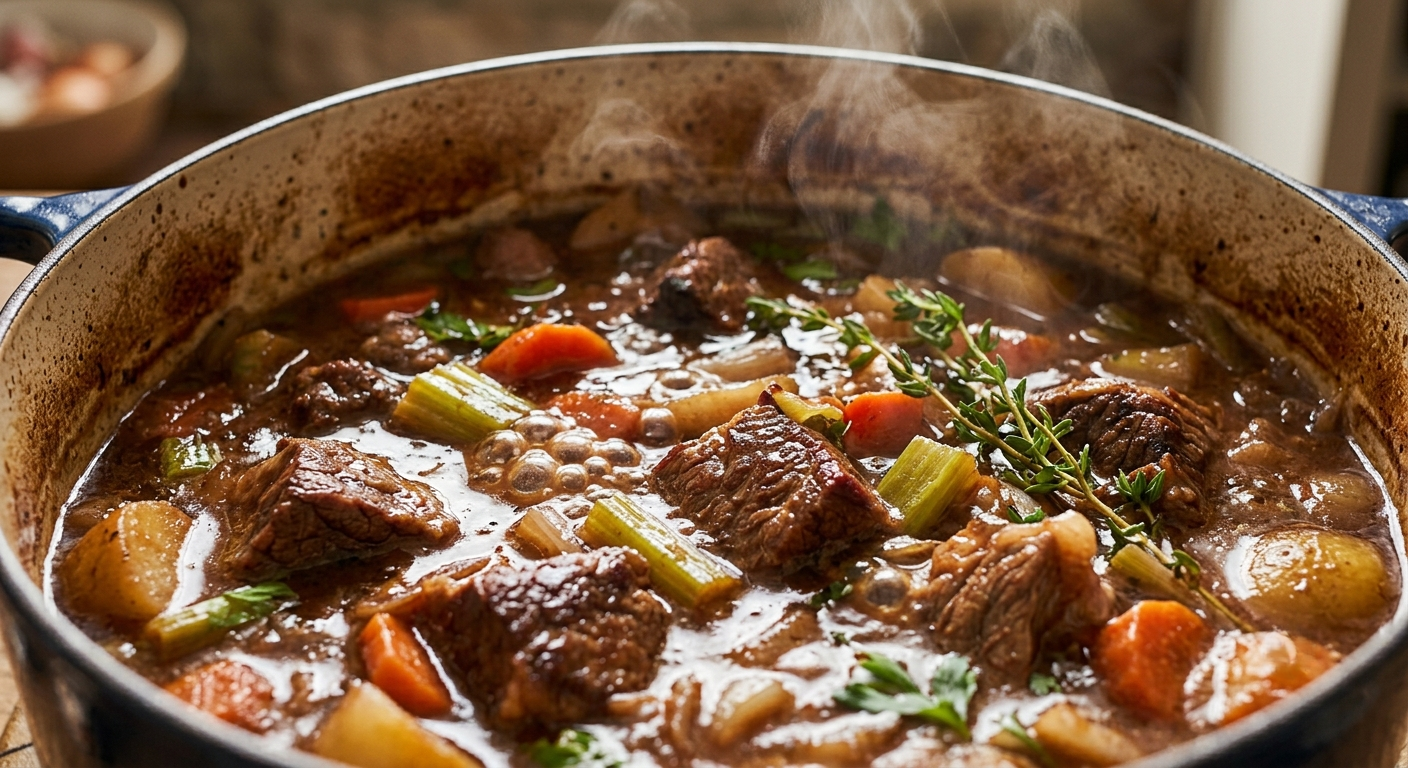
Stewing vs. Braising: What’s the Difference?
| Method | Liquid Level | Food Size | Best Equipment |
| Stewing | Food fully submerged | Small, uniform bites | Heavy-bottomed Stockpot / Dutch Oven |
| Braising | Food partially submerged (1/3 to 1/2) | Large cuts (Short ribs, Whole chuck) | Heavy Dutch Oven with tight lid |
As the liquid simmers and reduces, flavors concentrate, giving you that velvety texture without relying heavily on artificial thickeners like cornstarch.
5. Finishes & Adjustments: Balancing the Pot
Even after hours of simmering, your pot might feel slightly heavy or flat. This is where finishing touches come in to perfect your deeply flavorful soups stews and braises.
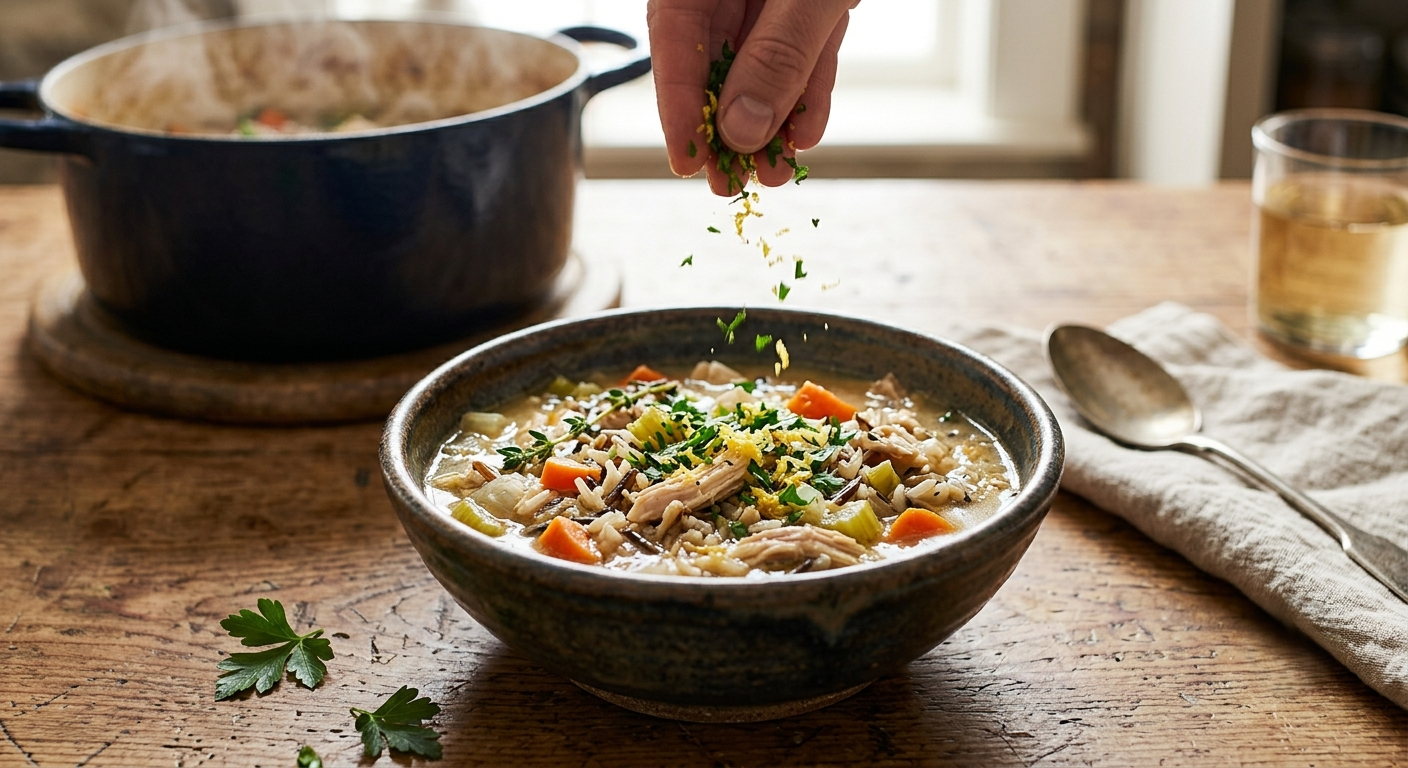
How to Fix Common Flavor Imbalances
- Too Heavy / Rich: Stir in a splash of red wine vinegar, fresh lemon juice, or chopped fresh herbs (parsley, chervil) right before serving.
- Lacks Depth: Add a dash of soy sauce, Worcestershire sauce, or aged parmesan rind during the last 30 minutes for an umami boost.
- Needs Body: Swirl in a tablespoon of cold compound butter (beurre manié) or a splash of heavy cream.
Conclusion
Creating deeply flavorful soups stews and braises is an art built on simple, repeatable techniques. By taking the time to dry and sear your meats, build aromatic bases, deglaze fond, and allow low-and-slow reductions to happen naturally, you elevate basic ingredients into unforgettable meals. Next time you step into the kitchen, take your time with these foundational steps and taste the difference yourself.
Frequently Asked Questions
What makes soups, stews, and braises deeply flavorful?
Deep flavor comes from layering: searing proteins to create a Maillard reaction, sautéing aromatics, deglazing the pan fond with wine or broth, and simmering long enough to break down connective tissues into rich gelatin.
Why does my stew taste flat even after cooking for hours?
Stews often taste flat if they lack acid or salt. Try adding a pinch of salt, a splash of vinegar, or a squeeze of fresh lemon juice at the end of cooking to brighten the heavy flavors.
Can I make deeply flavorful soups and stews in an Instant Pot?
Yes! However, you must use the “Sauté” function first to sear your meats and cook your aromatics before sealing the pressure cooker lid, ensuring you don’t miss out on vital flavor development.