

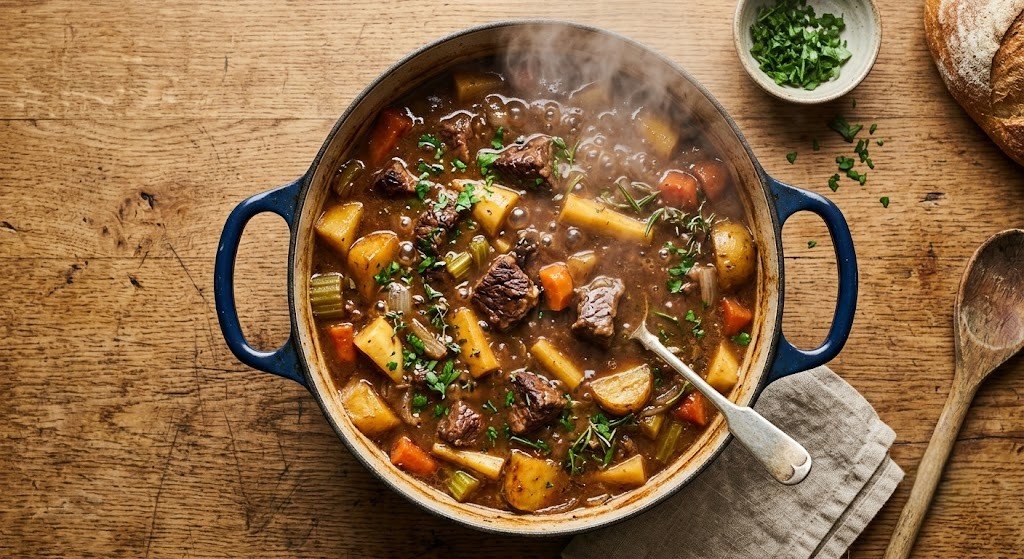
A truly great stew is far more than a collection of boiled ingredients floating in broth. It is a masterpiece of culinary timing where every phase of cooking adds a distinct dimension of taste. Knowing how to layer flavors in slow cooked stews elevates a flat, watery broth into a rich, velvety sauce with complex undertones.
Instead of throwing every ingredient into a pot at once, professional chefs build dishes systematically. By treating each stage—from searing protein to blooming spices—as an opportunity to build taste, you unlock deep umami, balanced acidity, and aromatic complexity. Here is your definitive guide to mastering flavor layering in slow-cooked stews.
Key Takeaways: The Principles of Flavor Layering
- Stage Your Ingredients: Never dump everything in the pot simultaneously; cook proteins, aromatics, liquids, and delicate herbs at different times.
- Master the Fond: The browned bits stuck to the bottom of the pan after searing hold the highest concentration of savory flavor.
- Bloom Dry Spices: Fry hard spices in fat before adding liquids to release their essential oils.
- Layer Acids: Add wine early to cook off raw alcohol, and finish with a splash of vinegar or citrus juice right before serving to awaken the palate.
- Time the Veggies: Hard root vegetables go in early; tender green vegetables go in during the final minutes to preserve texture and bright color.
1. Step One: High-Heat Browning and Fat Extraction
The foundation of any savory stew begins with fat and protein. Searing meat at high temperatures creates the Maillard reaction, turning proteins golden-brown and unlocking hundreds of new flavor compounds.
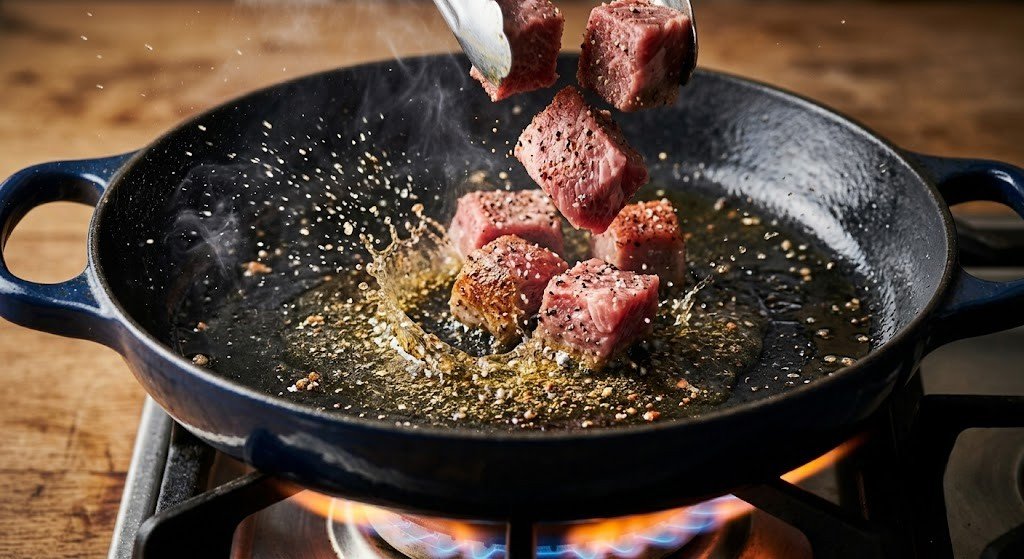
Searing Rules for Maximum Taste
- Remove Excess Surface Moisture: Dry your meat thoroughly with paper towels. Water creates steam, which prevents browning.
- Sear in Batches: Overcrowding the pan lowers its temperature, causing meat to simmer in its own juices rather than sear.
- Save the Rendering: Cook bacon or fat trimmings first. Searing your protein in rendered animal fat adds an underlying layer of rich flavor.
Once your protein is browned, set it aside. The dark coating remaining at the bottom of the pot is known as fond—and it is the secret engine behind how you layer flavors in slow cooked stews.
2. Step Two: Sweating Aromatics and Blooming Spices
With the meat out of the pan, drop your burner to medium heat. It is time to release the aromatics that form your liquid base.
Building the Base
Add your diced onions, carrots, and celery (the classic mirepoix). As they release water, they begin scraping up parts of the fond. Cook them until soft and translucent.
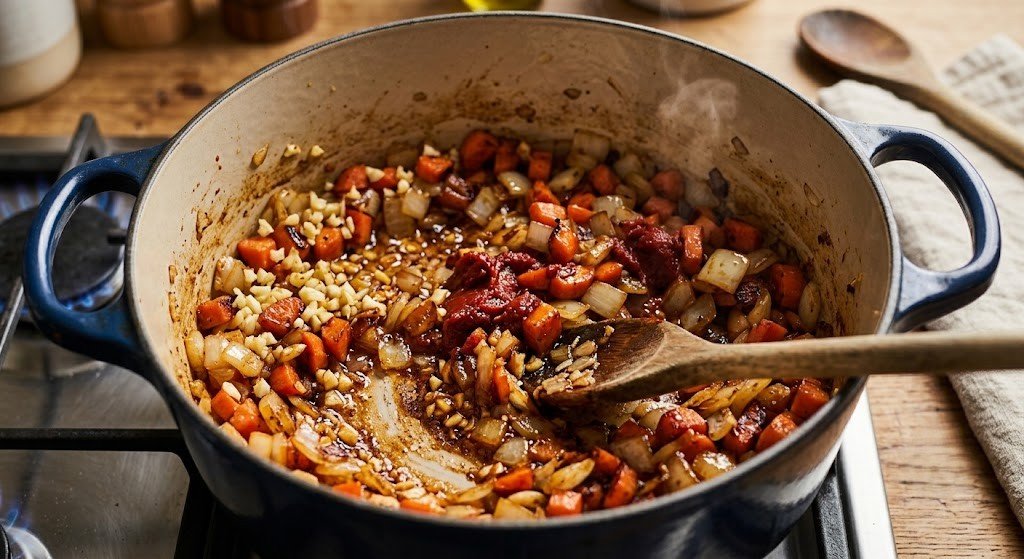
Tomato Paste and Spice Blooming
Before pouring in broth, make room in the center of the pan:
- Caramelize Tomato Paste: Sauté tomato paste for 2–3 minutes until it turns a dark brick-red color. This neutralizes metallic tin flavors and turns sugars sweet and rich.
- Bloom Spices: Add dried herbs like thyme, bay leaves, paprika, or cumin directly to the warm oil and vegetables for 60 seconds. Heat dissolves fat-soluble aromatic oils that water alone cannot extract.
For a deeper look into selecting complementary herbs and spices for rich gravies, explore our guide on [Internal Link: Insert relevant internal URL here with anchor text: Essential Rubs and Seasoning Blends for Savory Dishes].
3. Step Three: Deglazing and Extracting the Fond
Pouring liquid directly onto dry aromatics wastes the flavor baked into the bottom of the pan. Deglazing lifts those caramelized proteins directly into your sauce.
┌────────────────────────┐
│  High-Heat Meat Sear   │ ──> Creates Fond on Pot Bottom
└───────────┬────────────┘
            │
┌───────────▼────────────┐
│ Sauté Aromatics & Paste│ ──> Softens Veggies & Caramelizes Sugars
└───────────┬────────────┘
            │
┌───────────▼────────────┐
│ Deglaze with Wine/Acid │ ──> Lifts Fond & Adds Vibrant Acidity
└───────────┬────────────┘
            │
┌───────────▼────────────┐
│ Low & Slow Simmering   │ ──> Connective Tissues Melts into Gelatin
└────────────────────────┘
Best Deglazing Liquids
- Dry Red Wine: Cabernet Sauvignon or Côtes du Rhône for beef or lamb.
- Dry White Wine or Cider: Sauvignon Blanc or hard apple cider for pork and poultry.
- Dark Beer or Stout: Adds a rich, subtle bitterness perfect for beef or game.
Simmer the deglazing liquid until it reduces by half. This burns off harsh alcohol notes while leaving concentrated fruit and oak flavors behind.
To review proper cooking temperatures for safe meat handling when braising or stewing, check the [External Link: Insert high-authority external URL here with anchor text: USDA Food Safety Guidelines for Meat Preparation].
4. Step Four: Low and Slow Simmering
Now return the seared meat and accumulated juices back into the pot. Add high-quality stock or broth until ingredients are partially covered.
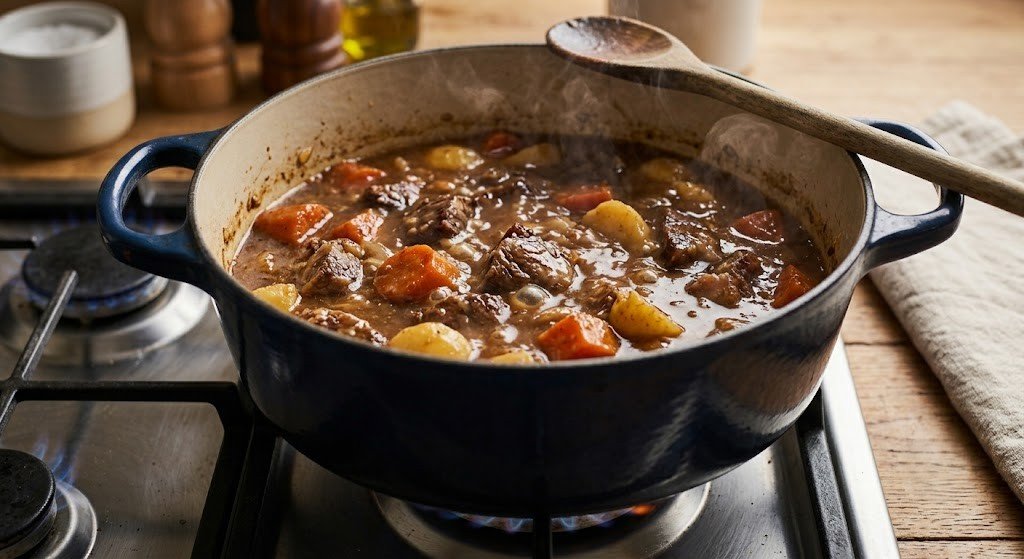
The real magic of knowing how to layer flavors in slow cooked stews happens during this simmer. Low, indirect heat (around 190°F–200°F) gently converts tough connective collagen into smooth, mouth-coating gelatin over 2 to 3 hours.
Vegetable Staging
- Hard Root Vegetables: Add carrots, parsnips, and potatoes during the last 45 minutes of cooking so they absorb broth without turning to mush.
- Tender Vegetables: Peas, spinach, and mushrooms should be folded in during the final 5 to 10 minutes.
5. Step Five: The Finishing Touches (Acid, Herbs, and Umami)
After hours of simmering, long cooking times can dull bright, volatile flavor compounds. The final layer of flavor brings the dish back to life right before serving.
Fixing Common Taste Pitfalls
- Lacks Brightness? Add a teaspoon of red wine vinegar, sherry vinegar, or fresh lemon juice. Acid cuts through heavy fat and wakes up the palate.
- Needs Umami Depth? Stir in a splash of soy sauce, Worcestershire sauce, or a grated parmesan rind.
- Lacks Freshness? Toss in fresh chopped parsley, tarragon, or chives immediately after turning off the burner.
Conclusion
Understanding how to layer flavors in slow cooked stews shifts your cooking from basic meal prep to true culinary craft. By searing meat intentionally, caramelizing aromatics, blooming spices in fat, and finishing with a burst of fresh acid, you transform simple cuts of meat into unforgettable meals. Take your time, trust the process, and let every layer do its job.
Frequently Asked Questions
Why does my slow-cooked stew taste bland?
Stew usually tastes bland if ingredients were boiled instead of seared, spices were added too late without blooming in oil, or the finished dish lacks sufficient salt and finishing acid (like vinegar or lemon juice).
When is the best time to add herbs when layering flavors in slow cooked stews?
Hard, woody herbs (like bay leaves, thyme, and rosemary) should be added early during the simmering phase. Delicate soft herbs (like parsley, basil, and chives) should be stirred in during the last 2 minutes of cooking.
Can you layer flavors effectively in a slow cooker or Crock-Pot?
Yes! However, you must perform the initial searing, aromatic sautéing, and wine deglazing in a skillet on the stove top first before transferring everything into the slow cooker basin.