

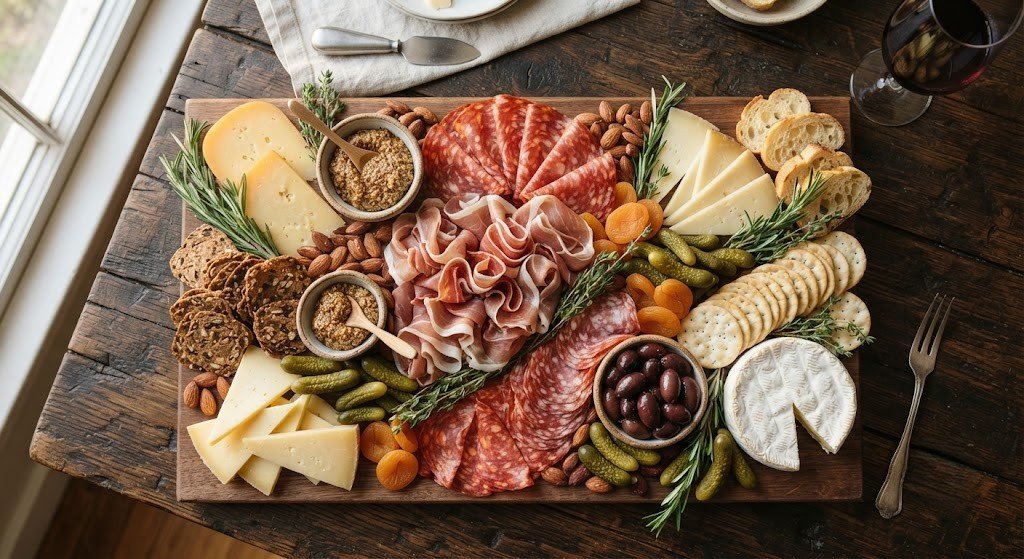
Hosting an unforgettable gathering doesn’t require hours standing over a hot stove. Learning how to assemble a balanced savory charcuterie board gives you an effortless, visual centerpiece that pleases every palate. Whether you are hosting an intimate dinner party, a holiday celebration, or a casual weekend wine night, a thoughtfully designed platter balances rich, fatty meats with sharp cheeses, crisp crackers, and acidic, briny accents.
The secret to a successful spread isn’t just buying expensive ingredients; it lies in flavor contrast, textural balance, and strategic spatial arrangement.
Key Takeaways
- The Rule of Threes: Select three types of cheese (hard, soft, aged) and three varieties of cured meat to establish flavor diversity.
- Balance Richness with Acid: Pair fat-heavy meats like prosciutto or salami with pickles, cornichons, or grainy mustard to cleanse the palate.
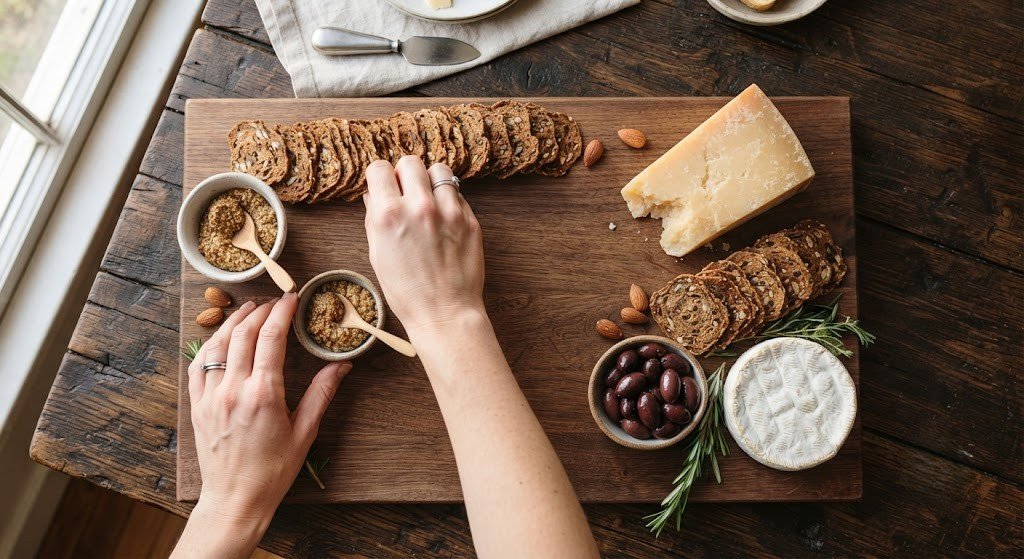
- Anchor First, Fill Second: Place small dip ramekins and cheese wheels on the board first to create natural focal points before filling open gaps.
- Temperature Matters: Serve cheeses and cold cuts at room temperature by removing them from the refrigerator 30 to 45 minutes before serving for maximum flavor.
Essential Components of a Charcuterie Board
Building a balanced savory charcuterie board requires selecting items across distinct culinary categories to ensure no single flavor profile overpowers the board.
1. Cured Meats & Charcuterie
Cured meats form the savory backbone of the board. Aim for a mix of textures and fat content:
- Silky & Thin: Prosciutto di Parma or Jamón Ibérico, folded loosely into delicate ribbons.
- Firm & Robust: Genoa salami, dry-cured chorizo, or calabrese salami, sliced thin or presented in rosettes.
- Rich & Spreadable: Duck pâté, pork rillettes, or Nduja for an added depth of flavor.
2. Artisan Cheeses
Incorporate a variety of textures, aging times, and milk types (cow, goat, sheep):
- Soft & Creamy: Triple-crème Brie, Camembert, or fresh goat cheese.
- Firm & Aged: Aged Gouda, sharp white Cheddar, or Manchego.
- Piquant & Bold: Roquefort, Gorgonzola, or aged Pecorino Romano.
3. Starches & Vehicles
Provide sturdy bases that won’t crumble under thick cheeses or heavy meats:
- Seeded artisan crackers, sea salt flatbreads, toasted baguette slices, and thin breadsticks (grissini).
Step-by-Step Board Assembly and Styling
To transform simple ingredients into an eye-catching spread, follow this structured, step-by-step layout process:
Step 1: Position the Anchor Items
Place your non-board items first. Set down small ramekins filled with mustard, tapenade, or honey, along with whole cheese wheels or large wedges. Distribute these evenly across opposite ends of the board to establish balance.
Step 2: Layer the Cured Meats
Fold or roll your cured meats into dynamic shapes rather than laying them flat. Create salami rivers by fanning overlapping slices across the board, or gather prosciutto into loose mounds. For more crowd-pleasing party appetizers and ideas, explore our [Internal Link: Insert relevant internal URL here with anchor text: guide to quick homemade grazing board dips].
Step 3: Arrange Starches and Crackers
Fan your crackers, baguette rounds, and flatbreads in sweeping curves around the cheese wheels and meat folds. Keeping starches tucked near the meats makes self-serving intuitive for guests.
Step 4: Fill Gaps with Fresh & Briny Accents
Eliminate empty space by filling open gaps with fresh fruit (grapes, fig halves), dried apricots, roasted nuts, cornichons, and pitted olives. Garnish with fresh sprigs of rosemary or thyme for a vibrant touch.
For food safety guidelines on how long perishable meat and cheese boards can safely sit out at room temperature, review the official [External Link: Insert high-authority external URL here with anchor text: USDA Party Food Safety Recommendations].
Pro Tips for Flavor and Texture Balance
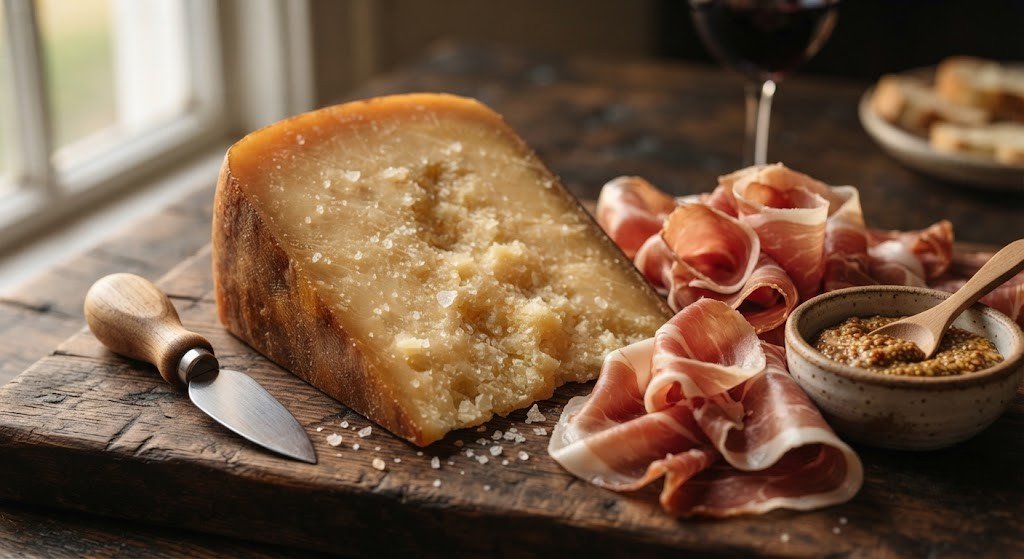
- Incorporate Five Flavor Pillars: Ensure your board includes salty (salami), sweet (figs/honey), savory (aged cheese), sour/acidic (pickles/mustard), and bitter (walnuts/dark chocolate) notes.
- Keep Wet Items Separate: Always put wet, oily, or briny ingredients like olives, pickles, and spreads into small bowls to keep crackers crispy.
- Pre-Slice Hard Cheeses: Slice a few pieces of hard cheese ahead of time so guests feel comfortable diving in without struggling to cut tough wedges.
Frequently Asked Questions
How much meat and cheese should I plan per person for a charcuterie board?
For a light appetizer before a meal, budget 2 to 3 ounces of total meat and cheese per guest. If the balanced savory charcuterie board is the main food event for the party, increase the portion to 5 to 6 ounces of meat and cheese per person.
Can I prepare a charcuterie board in advance?
Yes! You can slice cheeses, fold meats, and prepare dips up to 24 hours in advance, keeping them covered in airtight containers in the fridge. Assemble the dry ingredients (crackers, nuts) and place the chilled items on the board 30 to 45 minutes before guests arrive.
What are the best nut and fruit pairings for a savory board?
Marinated almonds, candied walnuts, and pistachios offer great crunch. Pair them with fresh figs, dark grapes, crisp apple slices, and dried apricots to complement the salty cured meats.
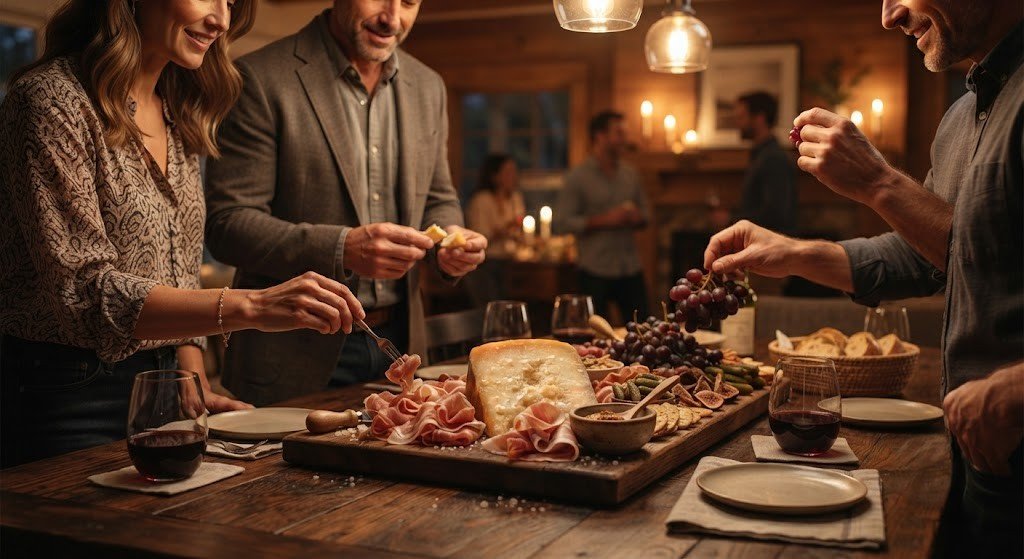
Creating a balanced savory charcuterie board is an art form that combines effortless entertaining with gourmet flavor. By focusing on contrasting textures, varied flavor profiles, and dense visual arrangements, you can assemble a stunning spread that serves as the highlight of any gathering.
What are your go-to meat and cheese combinations for entertaining?