

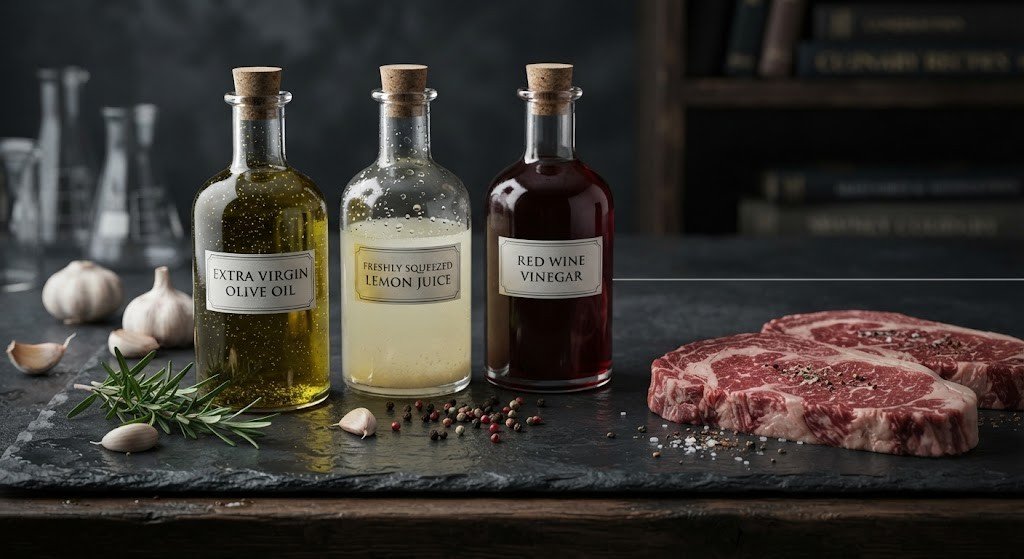
Marinades are often treated as simple flavor bath mixtures, but behind every great marinade lies a precise chemical dance. Understanding how ingredients interact at a molecular level transforms everyday cooking into a repeatable, high-level culinary skill.
At the center of this chemical process is the balance between acidic components and fatty elements. Mastering acid vs fat in marinades allows you to tenderize proteins, carry oil-soluble flavor compounds deep into food, and prevent tough or mushy textures. By breaking down the distinct roles of acids and fats, you can construct well-balanced marinades tailored to any cut of meat, poultry, or vegetable.
Key Takeaways
- Acids Denature Proteins: Acidic ingredients (citrus, vinegar, yogurt) break down protein bonds to tenderize meat, but over-marinating causes mushiness or surface toughness.
- Fats Transmit Flavor: Fats (olive oil, sesame oil, ghee) act as carriers for fat-soluble aromatics like herbs and spices, transferring flavor effectively to food.
- Fats Protect Against Drying: Oil creates a moisture barrier that shields meat from aggressive surface heat during searing or grilling.
- The Golden Ratio: A standard, effective marinade ratio consists of 3 parts fat to 1 part acid, adjusted based on protein delicate nature and soak time.
What Does Acid Do in a Marinade?
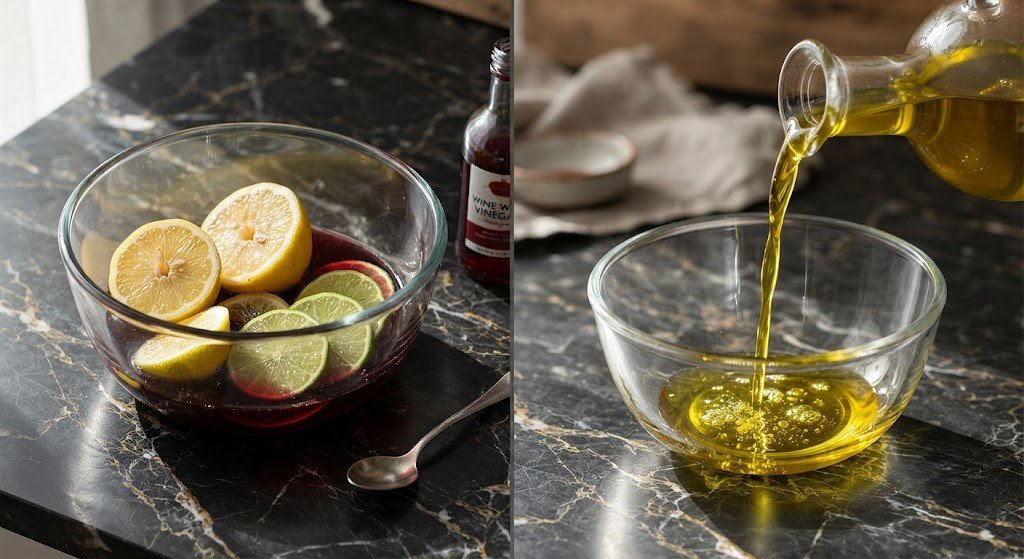
Acidic ingredients serve as the primary chemical agents responsible for altering protein structure and delivering sharp, bright flavor profiles. Common culinary acids include lemon juice, lime juice, various vinegars (balsamic, apple cider, red wine), buttermilk, and yogurt.
1. Protein Denaturation and Tenderization
Meats consist of tightly bound protein chains. When exposed to acids with a low pH (typically between 2.0 and 3.5), these protein chains undergo denaturation—they unwind and loosen their structures.
As these chains uncoil, water molecules become trapped within the loosened network, initially making the meat feel softer and more tender.
2. The Danger of Over-Acidification
While mild denaturation yields tender meat, extended exposure to strong acids produces the opposite effect. Over time, the uncoiled proteins tightly cross-link and squeeze out trapped moisture—a process known as syneresis. This leaves the outer layer of the meat rubbery, chalky, or dry.
When analyzing acid vs fat in marinades, timing is crucial:
- Seafood / Fish: 15 to 30 minutes maximum (acids can “cook” delicate proteins, similar to ceviche).
- Poultry: 2 to 6 hours.
- Tough Cuts of Beef or Pork: 6 to 12 hours.
What Does Fat Do in a Marinade?
While acids handle structural alteration and brightness, fats provide richness, texture protection, and essential flavor transmission. Common fats used in marinades include neutral oils (canola, avocado), flavorful oils (extra virgin olive oil, toasted sesame oil), and dairy fats (yogurt, full-fat buttermilk).
1. Solvent Action for Fat-Soluble Flavors
Many key flavor molecules found in herbs, spices, garlic, and chilies (such as capsaicin in peppers or allicin in garlic) are fat-soluble, meaning they dissolve in oil rather than water.
Fat acts as a solvent that extracts these flavor compounds from solid ingredients and spreads them uniformly across the surface of the protein. Without fat, aromatic ingredients cling unevenly or fail to release their full aromatic potential.
2. Moisture Retention and Heat Conduction
During cooking—especially over open flames or high-heat skillets—moisture evaporates rapidly from the surface of meat. Fat forms a light protective barrier that slows down surface evaporation. Additionally, oil conducts heat evenly across irregularities on the meat’s surface, promoting superior browning via the Maillard reaction.
[Internal Link: Insert relevant internal URL here with anchor text: “complete guide to mastering flavor profiles with culinary fats”]
Acid vs. Fat in Marinades: Finding the Perfect Balance
Understanding the individual functions of acid and fat leads to the core question: How do you balance acid vs fat in marinades for optimal cooking results?
+-------------------+--------------------+---------------------------------------+
| Marinade Element  | Primary Function   | Recommended Ratio Range               |
+-------------------+--------------------+---------------------------------------+
| Fat (Oil/Dairy)   | Flavor carrier,    | 3 Parts (Standard) to 1 Part (Lean)   |
|                   | heat conduction    |                                       |
+-------------------+--------------------+---------------------------------------+
| Acid (Citrus/     | Protein uncoiling, | 1 Part (Standard) to 2 Parts (Tough)  |
| Vinegar)          | brightness         |                                       |
+-------------------+--------------------+---------------------------------------+
| Aromatics/Salt    | Seasoning, depth,  | To taste (Salt ~1% total mass)        |
|                   | flavor delivery    |                                       |
+-------------------+--------------------+---------------------------------------+
The Standard 3:1 Ratio Rule
A reliable culinary baseline for most meats is 3 parts fat to 1 part acid. For example, 3 tablespoons of olive oil paired with 1 tablespoon of fresh lemon juice or red wine vinegar creates a balanced base.
- For Lean Proteins (Chicken Breast, White Fish): Increase the fat ratio slightly (4:1) to prevent the delicate meat from drying out or becoming stringy from excess acid.
- For Fatty or Tough Cuts (Skirt Steak, Pork Shoulder): Increase the acid ratio (2:1 or 1:1) to cut through heavy fat layers and break down dense connective tissue.
Dairy: The Hybrid Solution (Acid + Fat)
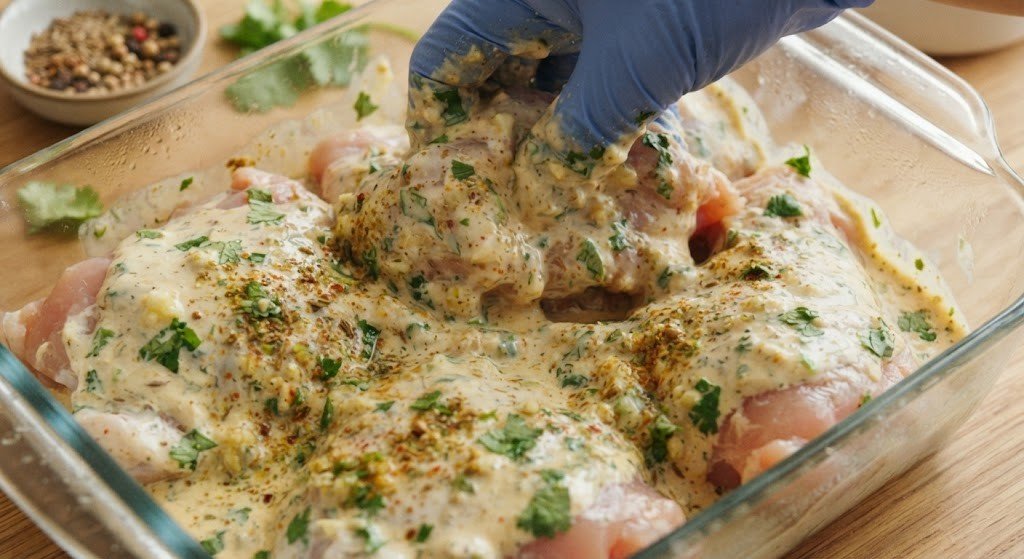
Dairy products like yogurt, buttermilk, and kefir occupy a unique position in marinade science because they contain both natural acids (lactic acid) and emulsified fats.
Why Lactic Acid is Unique
Unlike citrus juice (citric acid) or vinegar (acetic acid), lactic acid is significantly gentler on meat proteins. Lactic acid denatures proteins slowly over extended periods without causing the surface to turn tough or chalky. Simultaneously, the dairy fat coats the protein, sealing in moisture and creating a tender crust during roasting or frying.
[External Link: Insert high-authority external URL here with anchor text: “USDA guidelines on safe meat marinating temperatures and times”]
Essential Rules for Marinating Success
- Always Salt Separately or Measure Carefully: Salt penetrates deep into meat tissue via osmosis, whereas large fat and acid molecules largely stay on the surface. Ensure your marinade includes roughly 1% salt by weight for proper seasoning.
- Never Reuse Used Marinade: Marinade that has come into contact with raw meat contains bacteria. Either boil used marinade thoroughly for several minutes before using it as a glaze, or set aside a clean portion beforehand.
- Use Non-Reactive Containers: Always marinate in glass, stainless steel, or food-safe plastic bags. Avoid aluminum or unlined copper, as acids react with these metals, imparting a metallic flavor to your food.
Conclusion
Understanding the dynamic between acid vs fat in marinades removes the guesswork from cooking and recipe creation. Acids act as precise tenderizing agents that brighten flavors, while fats coat, conduct heat, and distribute essential aromatic compounds across every surface. By pairing the right ratios with controlled marinating times, you can consistently produce tender, deeply seasoned dishes every time you fire up the grill or stove.
Frequently Asked Questions (FAQs)
Does marinade penetrate deep into the center of meat?
No. Contrary to popular belief, most marinade molecules (fats, acids, and aromatics) are too large to penetrate deeper than a few millimeters into meat tissue. Salt is the primary component that penetrates deep inside via osmosis. The marinade primarily seasons and tenderizes the outer surface.
Can I leave meat in an acidic marinade overnight?
It depends on the protein. Tough cuts of beef can handle up to 12 hours, but chicken breasts or pork chops can turn mushy if exposed to high-acid marinades for longer than 6 to 8 hours. Delicate seafood should never marinate in acid for longer than 30 minutes.
Why does my marinade separate, and how do I fix it?
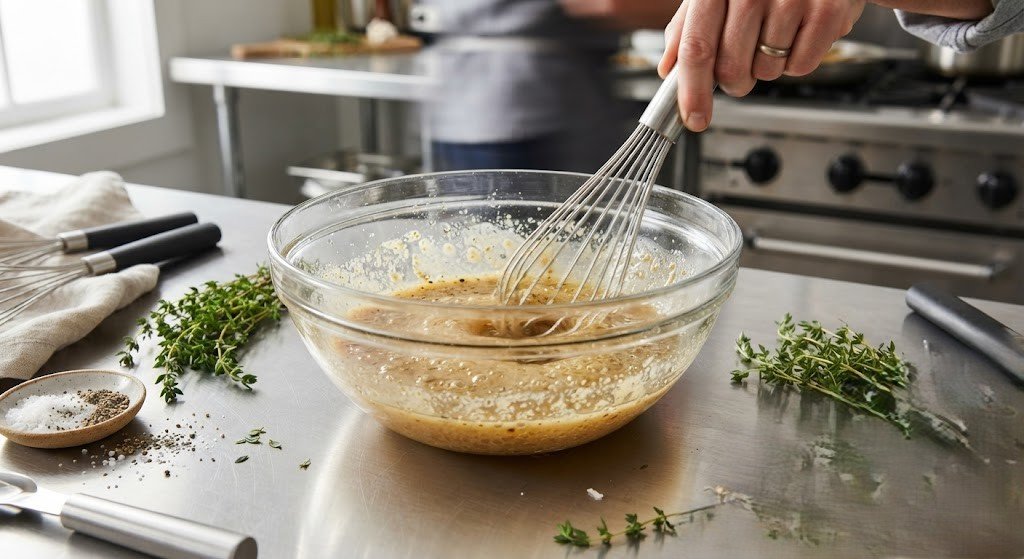
Oil (fat) and water-based liquids (acid) naturally separate because oil is hydrophobic. To keep your marinade blended, add an emulsifier such as Dijon mustard, egg yolk, or honey, and whisk vigorously before pouring it over your protein.