

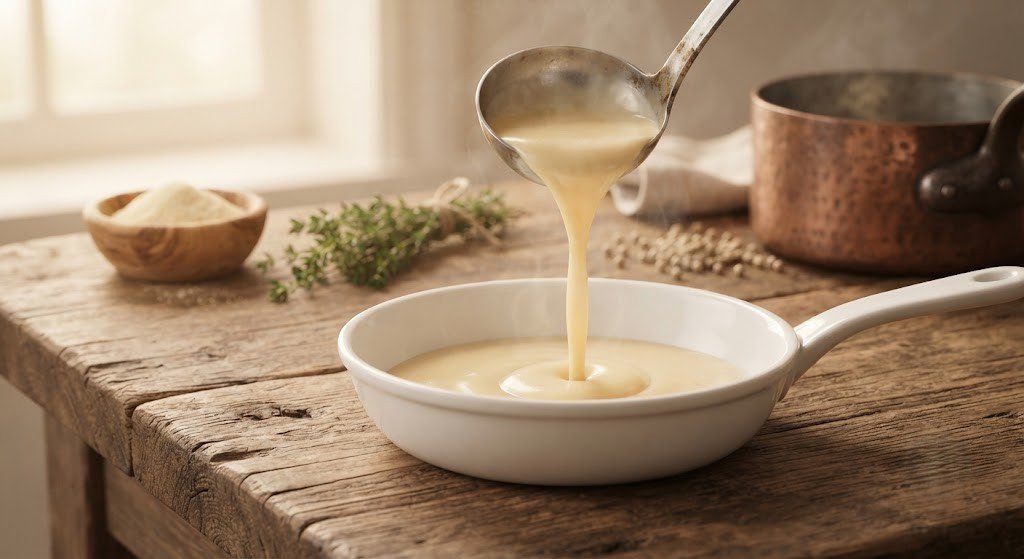
Among the foundational building blocks of classical gastronomy, few preparations match the velvety elegance of a classic French velouté. Derived from the French word velours (meaning “velvet”), a velouté is one of Auguste Escoffier’s five French mother sauces.
Unlike a rich Béchamel made with milk or a dark Espagnole built on brown stock, a velouté relies on a delicate combination of a light white stock (veal, chicken, or fish) thickened with a golden blond roux. Mastering this subtle sauce unlocks dozens of secondary “small sauces” (sauces derivadas) that can elevate roasted poultry, seafood, and spring vegetables.
Key Takeaways
- The Golden Ratio: A perfect velouté relies on equal parts butter and flour by weight (a classic roux) cooked to a pale golden shade before adding warm white stock.
- Temperature Contrast Matters: Always whisk warm stock into warm (or slightly cooled) roux to prevent lumps and ensure a silky, lump-free consistency.
- Silky Texture (Nappe): Gentle simmering for 15 to 20 minutes cooks out the raw flour flavor and reduces the liquid until it coats the back of a spoon.
- Endless Versatility: Adding cream, egg yolks, herbs, or mushrooms transforms a basic velouté into classic secondary sauces like Suprême, Allemande, or Bercy.
1. Understanding the Roux and Stock Foundations
The defining characteristic of a classic French velouté is its delicate flavor and pale, golden hue. Achieving this balance requires careful attention to both main components.
+-------------------+-------------------------------------+-------------------------------------+
| Component         | Ideal Selection                     | Culinary Role                       |
+-------------------+-------------------------------------+-------------------------------------+
| Fat               | Unsalted Butter                     | Provides rich flavor & roux base    |
| Thickener         | All-Purpose Flour                   | Gelatinizes starches for body       |
| Liquid            | White Chicken, Veal, or Fish Stock  | Provides primary savory profile     |
| Seasoning         | White Pepper & Kosher Salt          | Flavor without speckling color      |
+-------------------+-------------------------------------+-------------------------------------+
The Art of the Blond Roux
A roux cooked for Béchamel is kept pale white, while a roux for gumbo is cooked dark brown. For a velouté, you need a blond roux.
- Melt butter over medium-low heat.
- Whisk in an equal weight of flour.
- Cook for roughly 2 to 3 minutes until the raw starch aroma disappears and a faint nutty, straw-like scent emerges—without letting the flour brown significantly.
2. Step-by-Step Classic French Velouté Recipe
Follow these exact steps to create a flawless, restaurant-quality velouté from scratch.
Ingredients
- 4 tbsp (60g) unsalted butter
- 1/4 cup (30g) all-purpose flour
- 3 cups (720ml) high-quality white chicken, veal, or fish stock (warmed)
- 1/4 tsp ground white pepper
- 1/2 tsp fine kosher salt (adjusted to taste)
Step-by-Step Instructions
- Heat the Stock: In a separate saucepan, bring your white stock to a gentle simmer.
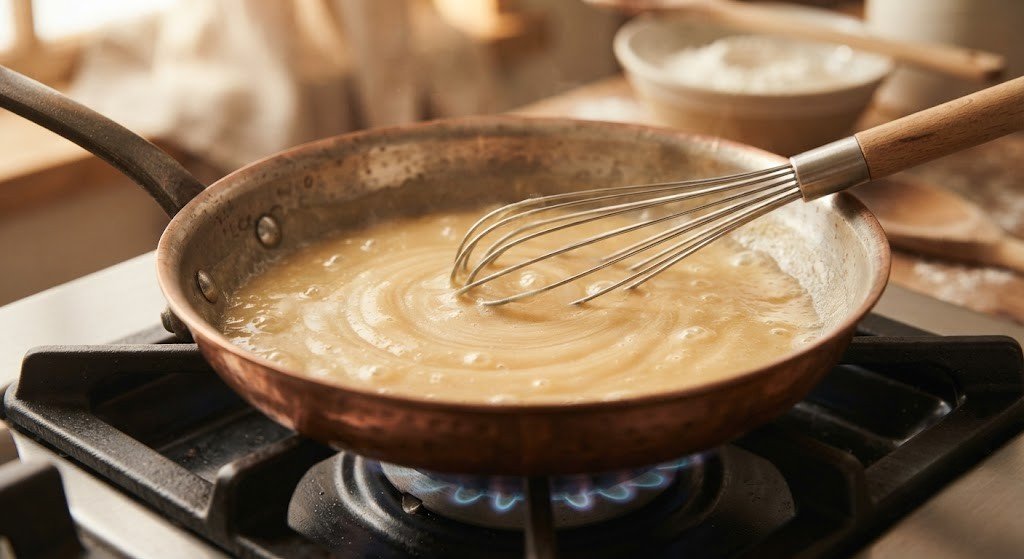
- Make the Roux: In a heavy-bottomed saucier, melt the butter over medium heat. Whisk in the flour and cook for 2 to 3 minutes until fragrant and straw-colored.
- Incorporate Liquid: Reduce heat to low. Slowly ladle the warm stock into the roux, whisking constantly to ensure no lumps form.
- Simmer & Reduce: Bring the sauce to a gentle simmer. Lower heat and cook for 15 to 20 minutes, skimming off any foam that rises to the top.
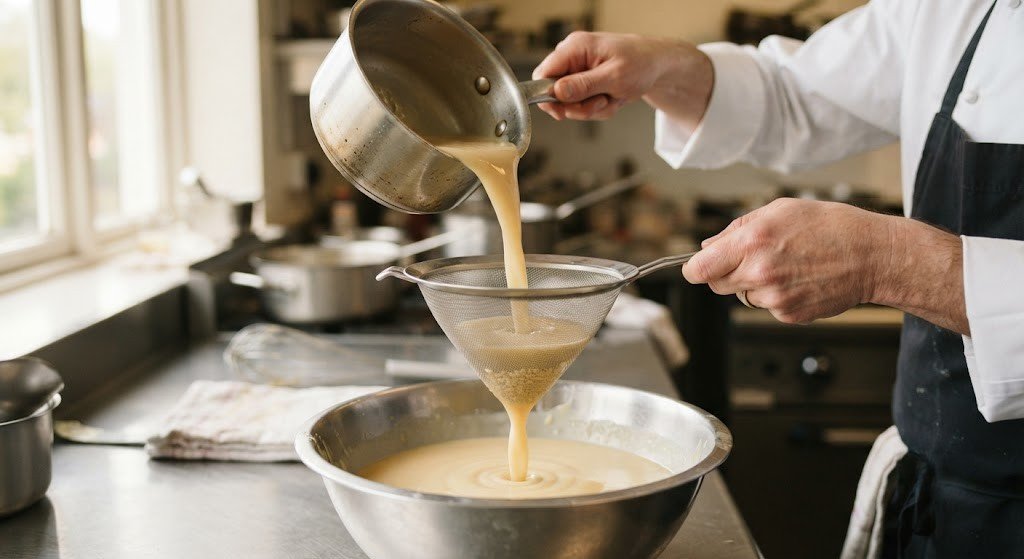
- Season & Strain: Season with white pepper and salt. Strain through a fine-mesh chinois for a glass-smooth finish.
For an in-depth breakdown of how this mother sauce fits into broader sauce-making fundamentals, explore our complete guide to [Internal Link: Insert relevant internal URL here with anchor text: culinary sauces and pan reductions].
To read more about historical French culinary standards and classical classifications, refer to historical records archived by the [External Link: Insert high-authority external URL here with anchor text: Auguste Escoffier School of Culinary Arts].
3. Essential Derivative Sauces (Velouté Variations)
Once you master the foundational classic French velouté, you can easily turn it into famous classical small sauces with a few key additions.
1. Sauce Suprême
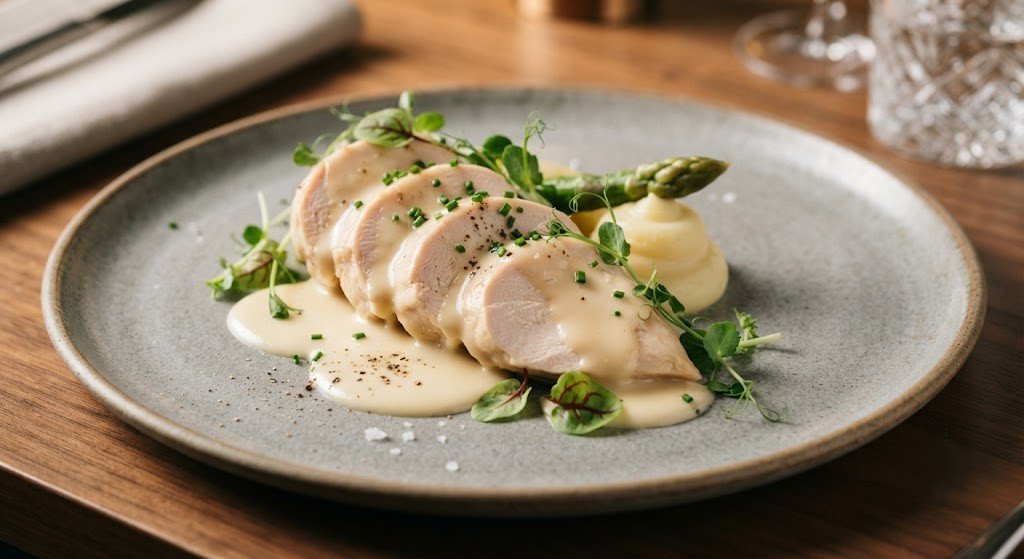
Built on a chicken velouté base, finish the sauce by whisking in 1/4 cup of heavy cream and a squeeze of fresh lemon juice off the heat. Ideal for poached chicken or vegetables.
2. Sauce Allemande
Built on a veal velouté base, enrich the sauce with a liaison (a mixture of 2 egg yolks whisked with 1/4 cup of heavy cream) right at the end of cooking.
3. Sauce Bercy
Built on a fish velouté base, reduce dry white wine with finely minced shallots before whisking in the fish velouté. Finish with cold butter cubes and fresh chopped parsley—perfect for pan-seared fish fillets.
Pro Tips for Troubleshooting Your Velouté
- If Lumps Form: Immediately remove from heat and pass the sauce through a fine-mesh sieve, or blend for 10 seconds with an immersion blender.
- To Prevent a “Skin” from Forming: If storing the velouté before serving, press a sheet of plastic wrap directly onto the surface of the sauce, or brush a thin layer of melted butter over the top.
- If the Sauce Is Too Thick: Whisk in warm stock 1 tablespoon at a time until you reach a silky nappe consistency.
Conclusion
The classic French velouté is an essential sauce that every home cook should master. Its beauty lies in its simplicity—combining a well-executed blond roux with a flavorful white stock to create a smooth, velvety foundation. Whether served on its own or transformed into rich variations like Sauce Suprême or Sauce Bercy, learning this classic technique brings authentic French culinary finesse directly to your kitchen.
Frequently Asked Questions (FAQs)
What is the difference between a Velouté and a Béchamel sauce?
While both rely on a pale roux for thickening, Béchamel uses whole milk as its primary liquid base, whereas a velouté uses a light white stock (veal, chicken, or fish).
Why is my French velouté graining or lumpy?
Lumps usually occur if cold stock is dumped into hot roux too quickly, or if the flour was not whisked continuously while adding the liquid. Always pour warm stock gradually while whisking vigorously.
Can I freeze a classic French velouté?
Yes! Plain velouté freezes well for up to 3 months in an airtight container. However, if you have added dairy or an egg yolk liaison (such as in Sauce Suprême or Allemande), freeze before adding those dairy finishings to prevent separation when reheated.