

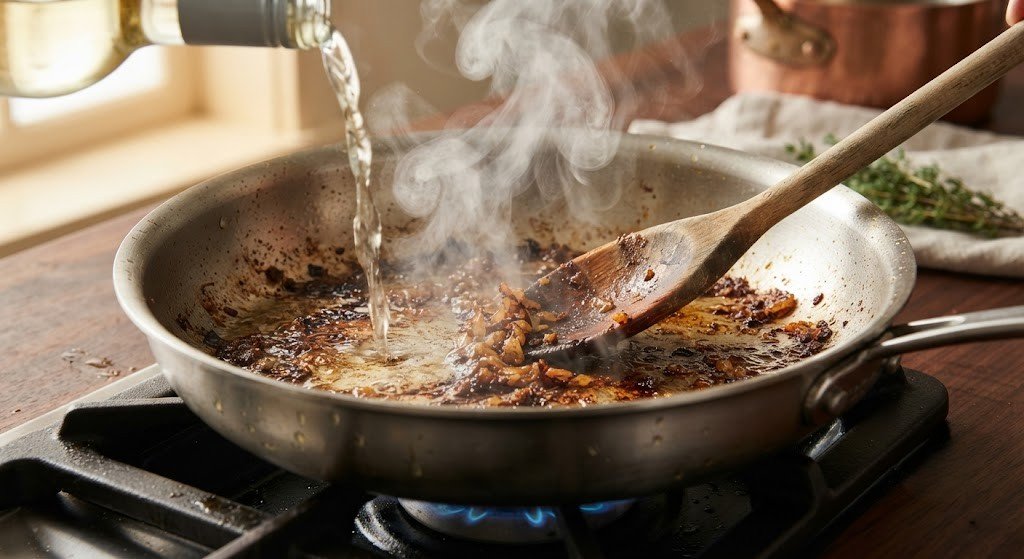
That dark, sticky layer of caramelized brown bits stuck to the bottom of your skillet after searing a steak, pork chop, or chicken breast isn’t burned food—it’s culinary gold. Known in French cooking as fond (meaning “foundation”), these concentrated bits of rendered proteins and sugars hold the secret to professional-grade cooking. Learning how to make a pan sauce out of fond allows you to turn simple pan drippings into a rich, glossy, restaurant-quality sauce in less than ten minutes.
By mastering the art of deglazing and emulsification, you can elevate everyday weeknight dinners without relying on store-bought sauces or complex ingredients.
Key Takeaways
- Build Great Fond First: Use stainless steel or cast iron rather than non-stick cookware to allow proper Maillard browning to develop.
- Deglaze with Acid: Use liquids like dry wine, citrus juice, or broth with a splash of vinegar to dissolve the fond and balance the richness.
- Scrape the Pan: Use a wooden spoon or silicone spatula to lift every bit of fond off the hot pan bottom while deglazing.
- Finish Cold (Monté au Beurre): Swirl cold, cubed unsalted butter off the heat at the very end to emulsify the sauce into a silky, velvety finish.
1. Understanding Fond: The Foundation of Skillet Sauces
Before learning how to transform it, it helps to understand what fond actually is and how to create it cleanly.
What Is Fond?
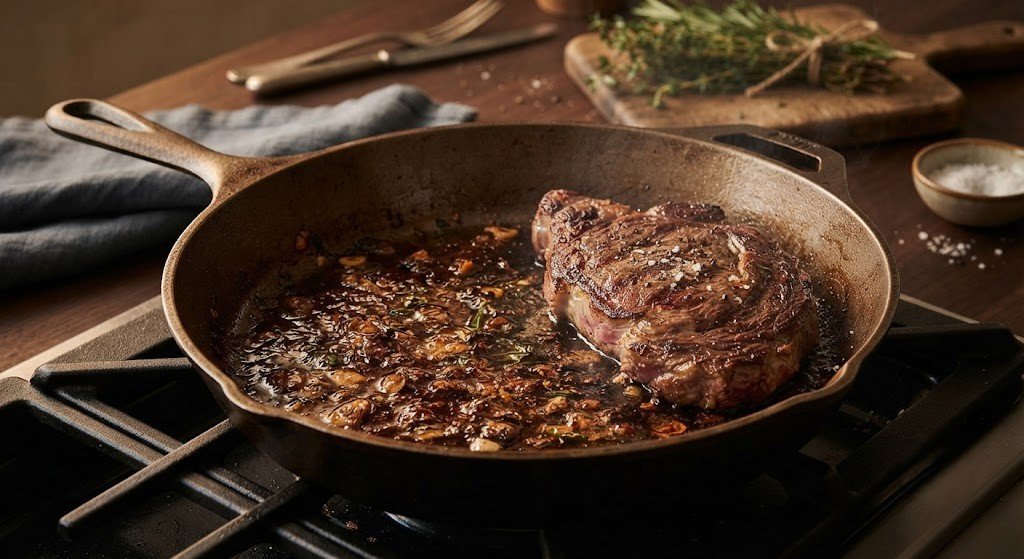
When meats or vegetables are seared over medium-high heat, proteins and natural sugars undergo the Maillard reaction. Moisture evaporates, leaving behind intensely savory, caramelized deposits on the metal surface of your pan.
To build optimal fond:
- Avoid Non-Stick Pans: Non-stick coatings prevent fond from adhering to the pan surface properly.
- Control Your Heat: Medium to high heat produces golden-brown fond. Blackened fond, however, is burnt and will turn your sauce bitter.
- Dry Your Protein: Excess surface moisture creates steam, which prevents proper searing and browning.
2. Step-by-Step: Deglazing Secrets for the Perfect Pan Sauce
Creating a balanced pan sauce out of fond follows a simple, repeatable sequence. Once you master this workflow, you can customize it with different wines, herbs, and stocks.
+-------------------+-----------------------------------+-----------------------------------+
| Stage             | Key Ingredients                   | Main Goal                         |
+-------------------+-----------------------------------+-----------------------------------+
| 1. Aromatics      | Shallots, garlic, fresh thyme     | Build an aromatic flavor base     |
| 2. Deglaze        | Wine, stock, or citrus juice      | Lift and dissolve the fond        |
| 3. Reduction      | Low-sodium broth / stock          | Concentrate flavor and thicken    |
| 4. Emulsification | Cold unsalted butter, cream       | Add gloss, body, and smoothness   |
+-------------------+-----------------------------------+-----------------------------------+
The Deglazing Process
- Remove the Protein: Transfer your seared meat to a warm plate to rest.
- Sauté Aromatics: Drain all but 1 tablespoon of excess rendered fat. Add finely diced shallots or garlic to the pan, cooking for 1 minute until fragrant.
- Pour in the Deglazing Liquid: Off the heat briefly, pour in 1/2 cup of liquid (such as dry red or white wine, vermouth, or lemon juice).
- Scrape and Simmer: Return to medium-high heat. Use a wooden spoon to vigorously scrape the bottom of the skillet, completely dissolving the fond into the bubbling liquid.
Understanding the chemical breakdown during reduction can help you dial in your technique; for deeper insights on the physics of emulsions and reduction rates, explore the culinary science guides published by the [External Link: Insert high-authority external URL here with anchor text: Serious Eats Culinary Science Division].
If you are expanding your foundational cooking skills, be sure to check out our complete breakdown of [Internal Link: Insert relevant internal URL here with anchor text: culinary sauces and pan reductions] for a deeper look at classical French techniques.
3. How to Finish and Balance Your Pan Sauce
The difference between a watery liquid and a velvet-smooth reduction comes down to the final steps: reduction and emulsification.
Reduction to Nappe Consistency
After deglazing, pour in 1/2 to 3/4 cup of high-collagen stock (beef, chicken, or veal). Simmer rapidly until the liquid reduces by roughly half. You know it’s ready when it reaches nappe consistency—meaning it is thick enough to lightly coat the back of a wooden spoon without running off instantly.
The Power of Monté au Beurre
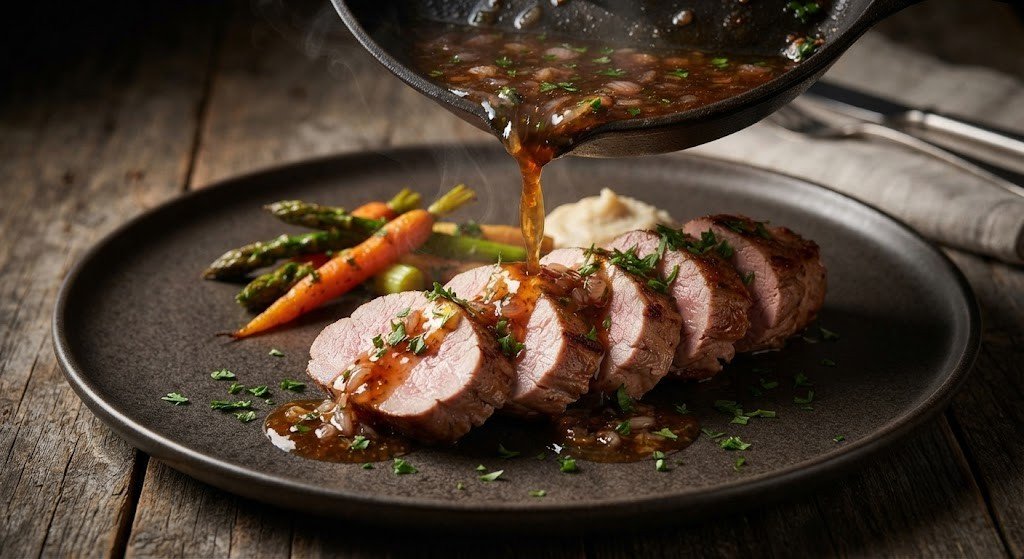
Remove the pan entirely from the heat source. Add 2 tablespoons of ice-cold, unsalted butter cut into small cubes. Swirl or whisk the butter into the warm sauce constantly until fully melted.
Important: Do not boil the sauce after adding the butter! High heat will break the emulsion, separating the butter fat from the sauce and leaving it oily.
Pro Tips for Troubleshooting Your Pan Sauce
- If the Sauce Is Too Salty: Stir in a splash of heavy cream or a squeeze of fresh lemon juice to mask excess sodium. Avoid using heavily salted canned broths as your reduction base.
- If the Sauce Is Too Thin: Reduce it further over medium heat, or whisk in a tiny knob of beurre manié (equal parts softened butter and flour kneaded together).
- If the Sauce Breaks (Oily): Whisk in a tablespoon of cold water or warm stock off the heat to pull the emulsion back together.
Conclusion
Knowing how to make a pan sauce out of fond turns everyday skillet drippings into an extraordinary finishing sauce. By deglazing brown bits with wine or stock and finishing off the heat with cold butter, you unlock rich, concentrated flavors without complicated equipment or artificial additives. Next time you sear meat, don’t wash that skillet—deglaze it and enjoy a restaurant-worthy pan sauce right at home!
Frequently Asked Questions (FAQs)
Can you make a pan sauce out of fond without wine?
Yes! You can deglaze fond using low-sodium chicken or beef stock, apple cider, pomegranate juice, or water combined with a teaspoon of acid like fresh lemon juice or red wine vinegar.
Why is my fond black instead of brown?
If your pan temperature is too high or cooking fat burns, the fond turns black and bitter. If your fond burns, it cannot be salvaged for a pan sauce and should be wiped out before making a new sauce.
What kind of pan is best for creating fond?
Stainless steel and cast-iron skillets are best for creating fond. Non-stick cookware prevents the browned protein bits from sticking properly, making it difficult to form a true fond base.