

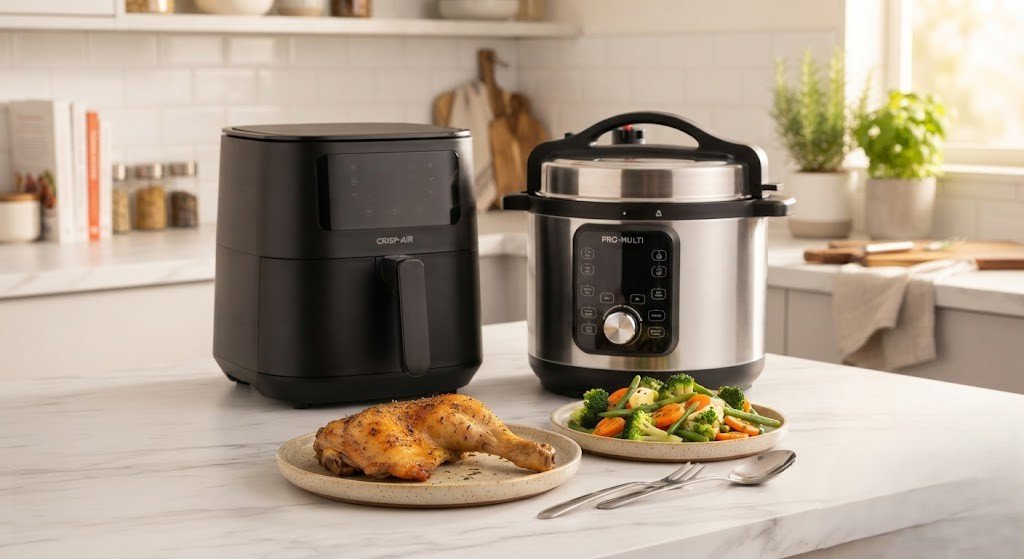
Modern counter space is prime real estate, and two appliances consistently battle for the top spot: the air fryer and pressure cooker. While both have revolutionized home cooking by drastically reducing meal preparation time, they operate on completely different culinary principles.
Understanding how to leverage an air fryer and pressure cooker—either individually or as a tag team—allows you to unlock restaurant-quality textures and deep flavors right from your home kitchen. Whether you want mouthwatering, fall-off-the-bone tender meats or ultra-crispy, healthy side dishes, mastering these tools is the ultimate kitchen upgrade.
Key Takeaways
- Mechanism Difference: Air fryers use rapid dry convection heat to crisp foods, while pressure cookers use trapped moist steam to cook rapidly and break down tough fibers.
- Best for Crispiness: Choose the air fryer for roasting, crisping, re-heating, and dry-heat baking.
- Best for Tenderness: Choose the pressure cooker for stews, tough cuts of meat, bone broths, grains, and leguminous dishes.
- The Dual-Cook Strategy: Combine pressure cooking (for speed and tenderness) with air frying (for a crisp finish) to create perfect meals like braised short ribs or whole roasted chickens.
- Temperature Adjustment: When converting oven recipes for the air fryer, reduce the temperature by 25°F (15°C) and decrease cooking time by roughly 20%.
Understanding the Core Differences: Air Fryer vs. Pressure Cooker
To get the best performance from each appliance, it helps to know how they work under the hood.
+------------------+----------------------------------+------------------------------------+
| Feature          | Air Fryer                        | Pressure Cooker                    |
+------------------+----------------------------------+------------------------------------+
| Cooking Medium   | High-speed circulating dry heat | Trapped, high-pressure wet steam   |
| Primary Outcome  | Crisp, golden, crunchy texture   | Super tender, juicy, moist results |
| Preheating Time  | Fast (1-3 minutes)               | Moderate (5-15 minutes to pressurize)|
| Ideal For        | Wings, fries, veggies, reheats   | Pot roasts, soups, rice, beans     |
+------------------+----------------------------------+------------------------------------+
An air fryer functions like a concentrated convection oven. A heating element paired with a powerful fan circulates hot, dry air around a perforated basket, producing a crisp exterior with minimal oil via the Maillard reaction.
Conversely, a pressure cooker creates a sealed atmosphere. By trapping steam, internal pressure rises, elevating the boiling point of water above 212°F (100°C). This forces moisture and flavor deep into food in a fraction of traditional cooking times.
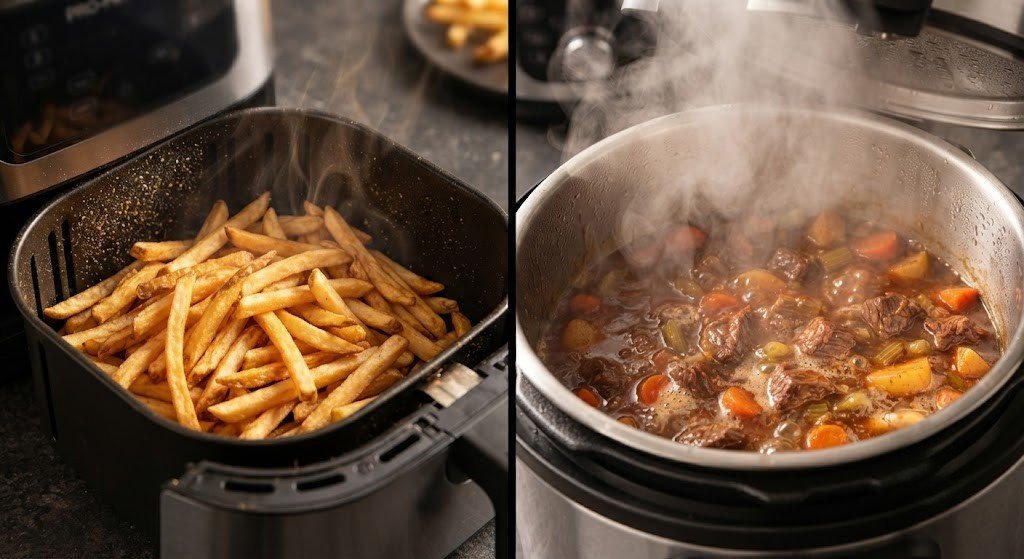
When to Use an Air Fryer vs. a Pressure Cooker
Knowing which appliance to select for specific ingredients prevents soggy fries or dried-out pot roasts.
Reach for Your Air Fryer When You Need:
- Textural Contrast: Achieving a crunchy skin on poultry or crisp edges on Brussels sprouts.
- Fast Reheating: Restoring leftover pizza, fried chicken, or roasted vegetables without the sogginess brought on by microwaves.
- Low-Oil Frying: Getting that fried-food crunch using up to 80% less fat.
Reach for Your Pressure Cooker When You Need:
- Deep Fiber Breakdown: Tenderizing tough cuts like beef chuck, pork shoulder, or brisket in under an hour.
- Fast Grains & Beans: Cooking un-soaked dried beans or brown rice in minutes.
- Extracting Concentrated Flavor: Making rich chicken stock or broth rapidly without evaporating liquids.
For more foundational cooking techniques, check out our guide on [Internal Link: Insert relevant internal URL here with anchor text like “essential meal prep strategies for home cooks”].
Combining Both Appliances for Next-Level Results
The real secret weapon in a modern kitchen is using an air fryer and pressure cooker together. Dual-cook combo appliances have popularized this approach, but using two standalone units works just as effectively.
The Two-Step Hybrid Method
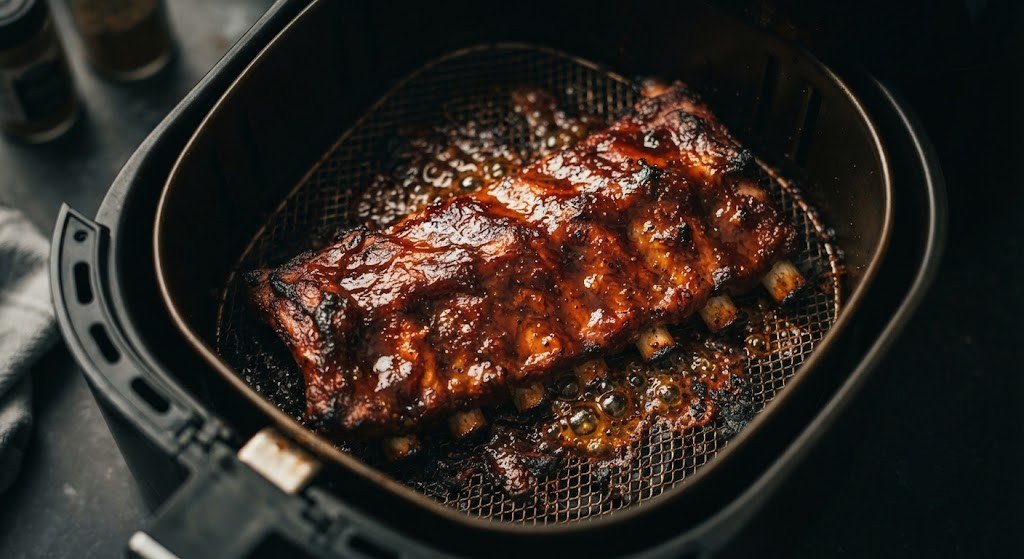
- Pressure Cook for Moisture & Tenderness: Start items like pork ribs, whole chickens, or thick carnitas in the pressure cooker. This rapidly cooks the interior and keeps it incredibly juicy.
- Air Fry for Color & Texture: Transfer the cooked food into the air fryer basket. Brush with a glaze or sauce and air fry at high heat (400°F / 200°C) for 5 to 8 minutes to set a caramelized, crisp outer crust.
How to Convert Standard Recipes
Adapting conventional oven or stovetop recipes for your air fryer and pressure cooker is simple once you master a few conversion rules.
Oven-to-Air Fryer Conversions
- Lower Temperature: Reduce the conventional oven recipe temperature by 25°F to 30°F.
- Reduce Time: Check for doneness at 20% to 25% less time than the original recipe calls for.
- Don’t Overcrowd: Leave space between items to allow the hot air to circulate freely.
Stovetop/Slow-Cooker to Pressure Cooker Conversions
- Reduce Liquids: Liquid does not evaporate in a sealed pressure cooker. Reduce total cooking liquids (water, broth) by roughly 25% to 30%.
- Account for Pressurization: Always factor in the 5–15 minutes it takes for the unit to come to full pressure before the timer starts.
To review official food safety temperature standards when modifying cooking times, refer to the [External Link: Insert high-authority external URL here with anchor text like “USDA Safe Minimum Internal Temperature Chart”].
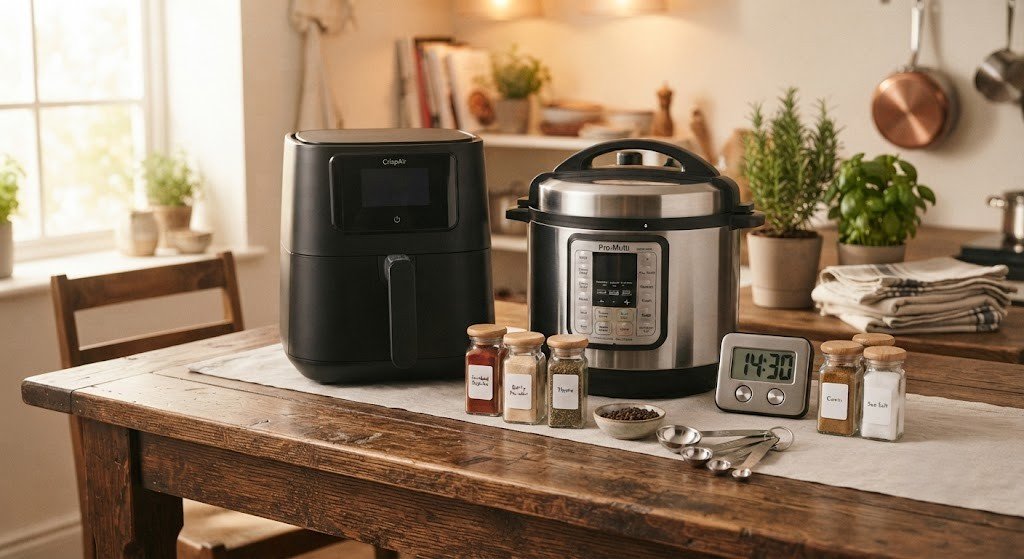
Essential Maintenance and Safety Best Practices
To keep both devices running smoothly and safely for years, keep these simple maintenance habits in mind:
- Clear Valve Checks: Always inspect the pressure release valve on your pressure cooker before cooking to ensure it is free of food debris.
- Mind the Air Flow: Keep your air fryer at least 5 inches away from walls or plastic outlets to prevent heat trapping or melting.
- Hand-Wash Seals & Baskets: Hand-washing silicone gaskets and non-stick air fryer baskets prolongs their lifespan and prevents premature wear.
Frequently Asked Questions (FAQs)
Can an air fryer replace a pressure cooker?
No, they serve complementary purposes. An air fryer and pressure cooker use completely opposite heat sources—dry heat for crisping versus wet steam for tenderizing. While some hybrid appliances offer both functions, one single function cannot replicate the other’s result.
Is cooking with an air fryer and pressure cooker healthier?
Yes! Air frying uses significantly less oil than deep frying, cutting down on extra calories and fats. Pressure cooking retains higher levels of heat-sensitive vitamins and nutrients compared to long boiling or traditional roasting methods.
Can I put foil or parchment paper in an air fryer or pressure cooker?
Parchment paper and aluminum foil are safe to use in an air fryer, provided there is food weighing it down so it does not touch the heating coil. However, foil should never be placed in a pressure cooker as it can block the steam vents and pressure relief valves.
Conclusion
Both the air fryer and pressure cooker deserve a permanent spot on your kitchen counter. By leveraging the fast, steam-infused tenderizing power of pressure cooking alongside the quick, golden crisping ability of air frying, you can elevate everyday meals with minimal effort. Experiment with combining these techniques, keep your conversion ratios in mind, and enjoy faster, more flavor-packed cooking every day!