

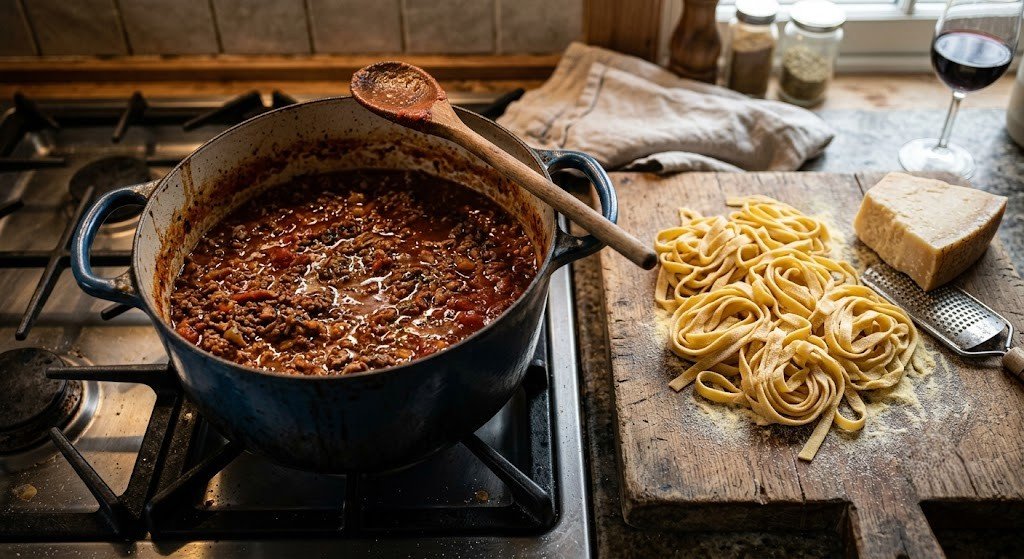
Few dishes in the culinary world match the deep, comforting satisfaction of a slow-simmered authentic Bolognese sauce (ragù alla Bolognese). Originating from the city of Bologna in Northern Italy, a true ragù is not a heavy, tomato-dominant sauce like the quick meat marinara common in Western quick-cooking. Instead, it is a rich, meat-forward sauce gently simmered for hours until the meat becomes melt-in-your-mouth tender, bonded together with aromatic vegetables, wine, and milk.
Achieving restaurant-quality results at home requires patience and respect for traditional Italian techniques. By understanding the science of flavor layering—from sweating the soffritto to tenderizing the meat with milk—you can turn basic kitchen staples into an extraordinary feast.
Key Takeaways
- Meat-Centric, Not Tomato-Heavy: True ragù uses tomato paste and crushed tomatoes sparingly to complement, rather than drown, the rich meat flavors.
- The Role of Milk: Adding whole milk tenderizes the ground meat proteins and neutralizes acidity from wine and tomatoes, yielding a velvety texture.
- Low and Slow: A minimal simmer of 2 to 3 hours is required for the collagen in the meat to break down, resulting in a thick, cohesive sauce.
- Ideal Pasta Pairing: Serve exclusively with flat ribbons like tagliatelle or pappardelle, or layer into lasagna. Avoid thin spaghetti, which cannot hold a heavy meat sauce.
Essential Ingredients for Traditional Ragù
To build a deep flavor foundation for your authentic Bolognese sauce, select fresh, high-quality ingredients:
- The Soffritto Base: Equal parts finely diced onion, celery, and carrot gently sautéed in olive oil or butter.
- Ground Meats: A combination of ground beef (80/20 lean-to-fat ratio) and ground pork or pancetta for balanced flavor and rich fat content.
- Dry Wine: Italian dry white wine (traditionally preferred in Bologna) or dry red wine to deglaze the pot and add bright acidity.
- Whole Milk: Whole dairy milk added midway through to tenderize the meat fibers.
- Tomato Paste & Strained Tomatoes (Passata): High-quality Italian double-concentrated tomato paste and a light addition of passata for color and savory depth.
- Broth: Homemade beef or veal stock added periodically to keep the sauce moist during long simmering.
Step-by-Step Instructions
Creating a classic, slow-cooked meat sauce requires layered execution. Follow these steps for an exceptional outcome:
Step 1: Build the Soffritto
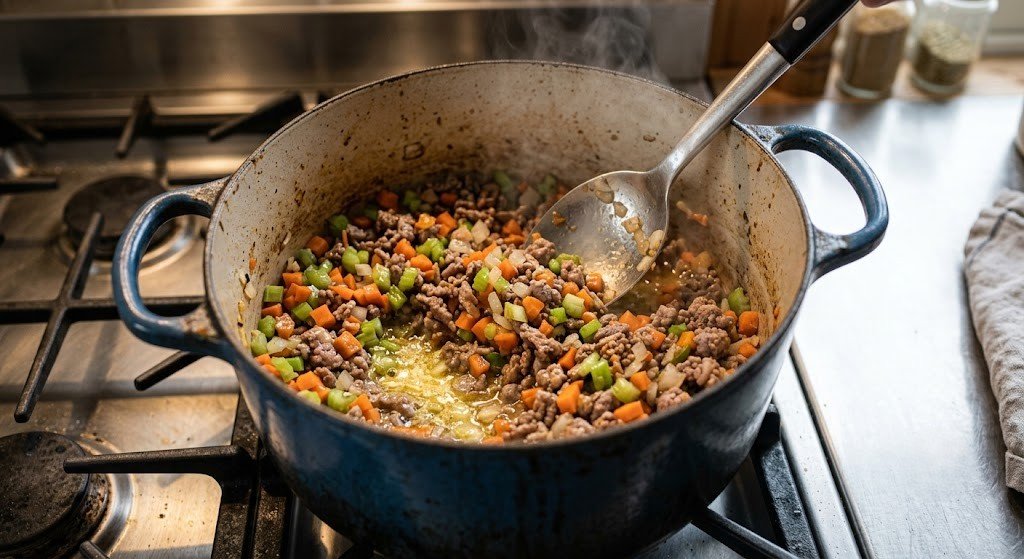
In a heavy-bottomed Dutch oven or cast-iron pot, heat a tablespoon of olive oil or butter over medium heat. Add finely diced onion, celery, and carrot. Cook slowly for 8 to 10 minutes until the vegetables are soft and translucent, but not burned.
Step 2: Brown the Meats
Add the pancetta or bacon first to render its fat, then add the ground beef and pork. Season with a pinch of salt and cracked black pepper. Break up the meat with a wooden spoon into tiny, fine pieces. Sauté until the meat loses its raw pink color, making sure not to crisp or dry it out.
Step 3: Deglaze with Wine
Pour in the dry white or red wine, scraping up any browned bits stuck to the bottom of the pot. Simmer gently for 5 to 7 minutes until the alcohol smell dissipates and the liquid reduces almost entirely. For more inspiration on traditional Italian comfort meals, explore our [Internal Link: Insert relevant internal URL here with anchor text: guide to classic regional Italian sauces].
Step 4: Incorporate Milk and Tomatoes
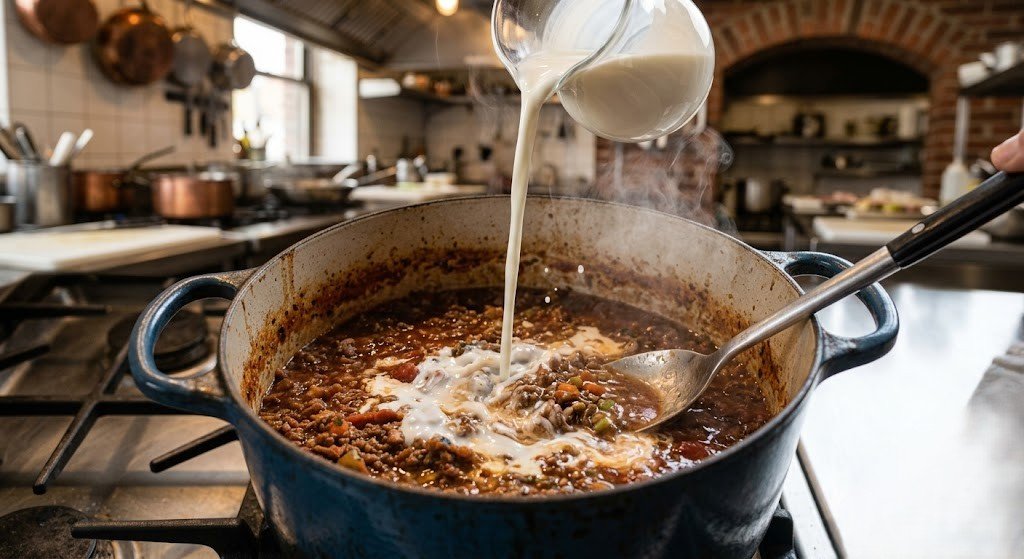
Reduce the heat to low and pour in the whole milk. Allow the sauce to simmer uncovered for 10 to 15 minutes until the milk evaporates. This step seals moisture into the meat. Stir in the tomato paste and passata until evenly mixed.
Step 5: The Slow Simmer
Pour in a splash of warm beef stock to loosen the texture. Cover the pot loosely with a lid, leaving a slight gap for steam to escape. Turn the burner to its lowest setting and let the authentic Bolognese sauce simmer gently for at least 2 to 3 hours. Stir occasionally, adding a ladle of stock whenever the sauce looks too dry.
To learn more about the strict cultural standards and historical origins of this dish, read the official history preserved by the [External Link: Insert high-authority external URL here with anchor text: Accademia Italiana della Cucina official guidelines].
Professional Tips for Sauce Success
- Finely Dice Your Vegetables: The soffritto should melt into the meat texture rather than produce chunky bites. Use a sharp knife or pulse briefly in a food processor.
- Never Skip the Milk: Milk is the defining element that separates a quick meat marinara from a true Italian ragù. It breaks down tough muscle tissue during the long cook time.
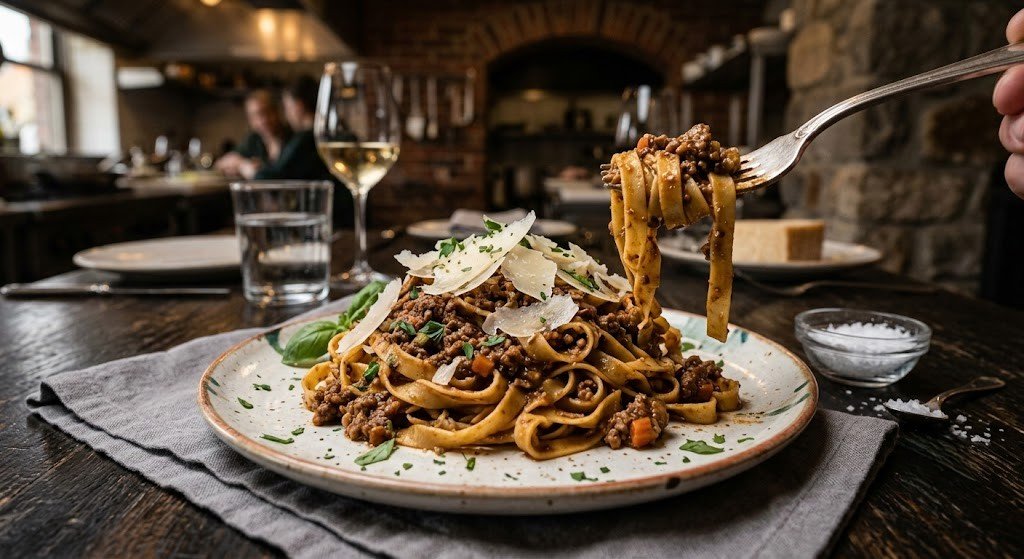
- Match with the Right Noodle: Serve your ragù over wide, flat egg pasta like fresh tagliatelle, pappardelle, or fettuccine. The wide surface area holds the heavy meat chunks far better than round, thin strands like spaghetti.
Frequently Asked Questions
Why do some traditional recipes use white wine instead of red wine?
In Bologna, chefs traditionally prefer dry white wine because it imparts a cleaner, less heavy acidity that allows the natural flavors of beef, pork, and milk to shine through without overpowering the dish.
Can I make authentic Bolognese sauce in a slow cooker or Instant Pot?
Yes! You can brown your soffritto, meat, wine, and milk on the stovetop first, then transfer everything to a slow cooker on low for 6 to 8 hours. The low, steady heat works exceptionally well for tenderizing meat.
How long does Bolognese sauce last in the fridge or freezer?
Bolognese actually tastes better the next day as the flavors continue to marry. Store it in an airtight container in the refrigerator for up to 4 days, or freeze it in sealed freezer bags for up to 3 months.
Mastering a slow-simmered authentic Bolognese sauce is one of the most rewarding skills you can bring to your kitchen. With patient timing, proper flavor layering, and quality ingredients, you can transform simple staples into a rich Italian masterpiece right at home.
What pasta shape do you plan to serve with your homemade ragù?